If you’ve been searching “what age should my child start tap dance” or “is my child too shy for dance class,” you’re not alone, and you’re actually asking two different questions at once. One is about age and coordination. The other is about temperament. Parents often assume the two are linked (“she’s shy, so maybe she’s not ready”), but they’re not the same thing at all, and mixing them up is the most common reason families delay signing up for a class their child would actually love.
Here’s how to think through both, honestly, before you book anything.
Key Takeaways
- Age readiness and shyness are two separate questions. A shy child can be perfectly ready; an outgoing child can still be too young.
- At CM Dancing, Tap 1 is designed for ages 6 to 8, giving dancers time to build the timing, coordination, and listening skills tap requires.
- Watch for practical signs like following two-step instructions, standing briefly on one foot, and showing rhythm, rather than relying on age alone.
- Shy or nervous kids often warm up gradually as a class becomes familiar, and that pace is normal.
- CM Dancing offers a free, no-obligation trial class, which is usually the fastest, lowest-pressure way to answer “is my child ready” instead of guessing from home.
What Age Should a Child Start Tap Dance?
Tap is a little different from styles like ballet or acro because it asks a child to do two things at once: keep a beat and control their feet precisely enough to make that beat audible. That combination of rhythm plus fine motor control tends to click a bit later than general movement skills do.
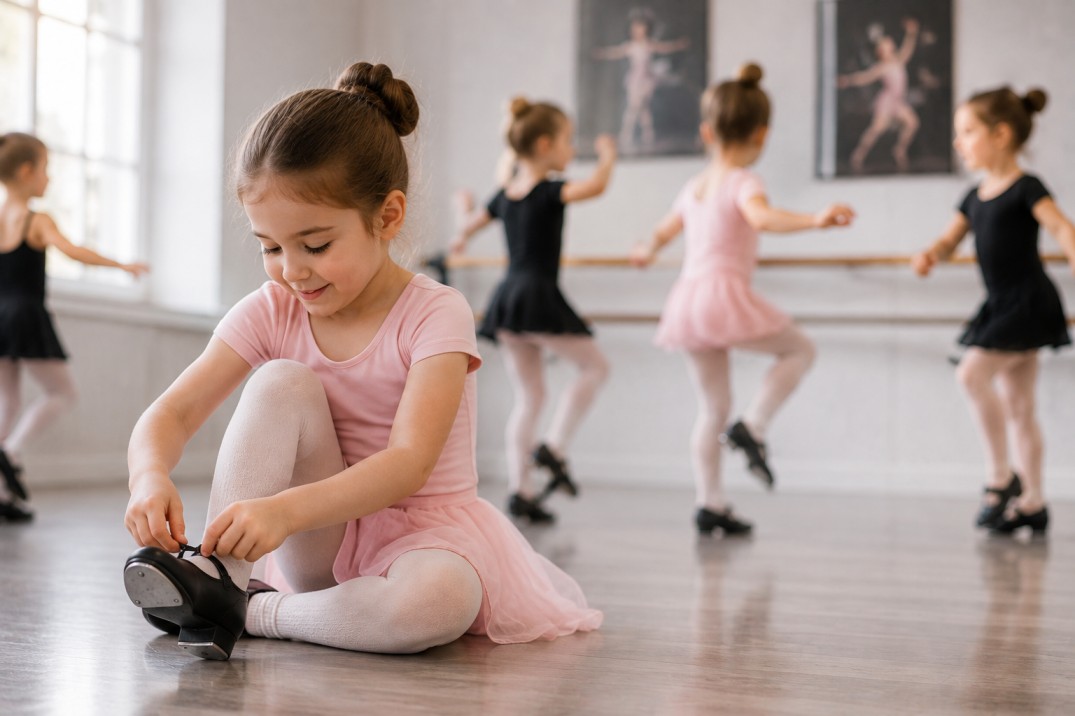
A few practical benchmarks worth watching for at home before enrolling in tap specifically:
- Can follow a two-step instruction (“touch your toe, then your heel”) without needing it repeated three times
- Can stand on one foot for a few seconds without holding onto something
- Shows some sense of rhythm, like bobbing to music, clapping along, or stomping on purpose
- Can separate from a parent for a class without needing them in the room the whole time
These kinds of coordination and instruction-following skills are part of the general early childhood developmental milestones tracked by the CDC, and they’re a useful reference point for parents trying to gauge readiness for a structured, rhythm-based activity like tap.
At CM Dancing, our Tap 1 class is designed for ages 6 to 8. It focuses on rhythm, timing, and coordination, while also building ankle strength and teaching dancers how different parts of the tap shoe create clean, crisp sound. If your child is younger and still developing those foundational skills, it’s worth asking what other age-appropriate dance classes might be a better first step before moving into tap.
Signs Your Child Is Ready for Tap (Even If They’re Young)
Age is a guideline, not a rule. Some kids hit these markers earlier, some later. The signs worth paying attention to:
- They tap their feet or hands to music without being asked
- They try to copy dance moves they see in videos or at family events, even badly
- They can sit through a 20- to 30-minute activity (a story, a craft, a car ride) without losing focus completely
- They ask about shoes, or want to wear “dance clothes,” or bring it up unprompted after seeing a recital or a sibling’s class
- They tolerate being around a small group of unfamiliar kids without needing to leave the room
None of these require your child to be outgoing. That’s an important distinction, and it leads into the question most shy-kid parents are really asking.
If your child is a bit older and you’re still deciding between styles, our post on dance classes for grade school children covers how age affects style fit beyond tap as well.
My Child Is Shy. Is Tap Dance Still a Good Fit?
Short answer: often, yes, and sometimes it’s a better fit than a more performance-forward style.
Shyness is about social comfort, not physical readiness. A shy child can have excellent rhythm, strong coordination, and genuine enthusiasm for the movement itself, even if the idea of being watched makes them nervous. Tap has a few things going for it here. The class is structured and repetitive, which shy kids often find calming rather than stressful. The focus is on your feet and the sound you’re making rather than performing to an audience, and there’s very little forced one-on-one interaction since everyone’s doing the same steps at the same time.
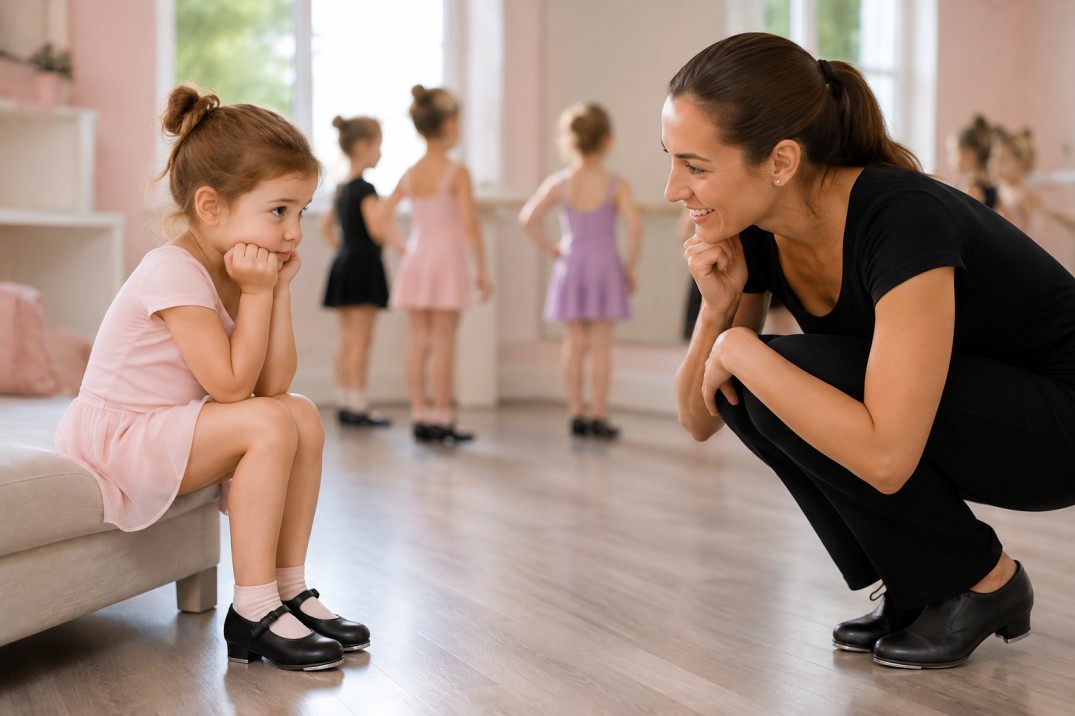
It’s common for quieter kids to stand toward the back and watch more than participate in their first class or two. That’s normal, not a red flag. Most shy dancers gradually open up as the routine becomes familiar, joining in a little more with each class.
Kids who do struggle tend to be the ones placed into a large, unstructured, high-energy class before they’ve had a chance to get comfortable with a smaller group first. That’s a pacing problem, not a shyness problem, and it’s something a good studio should be managing for you. Parents researching tap dance for shy kids often find that the studio’s group size and pacing matter more than the child’s personality itself, something we also touch on in confidence and life skills through dance.
How CM Dancing Supports Shy or Nervous Beginners
A few things about how our classes are actually run, for parents weighing this:
- A free, no-obligation trial class. You and your child can experience an actual class, same teacher, same room, same routine, before registering for a term. This matters most for shy kids, since it removes the pressure of a big first-day commitment.
- Age-appropriate groupings. Classes are built around age-specific programs, not thrown together, so your child isn’t the youngest or least experienced in the room by a wide margin.
- A comfortable waiting area. Parents can wait on-site, with a TV view into Studios A and B, which can help a nervous child settle in knowing you’re close by, without you being in the room itself.
- Individual attention within group classes. Even in a group setting, our instructors watch for kids who need a bit more encouragement, not just the ones raising their hands.
Many parents deciding if their child is ready for tap find that a low-pressure trial dance class answers the question faster than any checklist can.
What to Expect in Your Child’s First Tap Class
Knowing the general shape of the class in advance helps a lot with pre-class nerves, for both of you. Most first classes involve arrival and settling in, a warm-up focused on basic footwork, a simple combination broken into small, repeatable pieces, and a low-pressure moment near the end to show what was learned, not a performance. Exact structure and length can vary by age group and level, so it’s worth asking your instructor what a first class typically looks like for your child’s group.
If your child cries, freezes, or refuses to join in on day one, that’s genuinely common and not a sign the class isn’t right for them. Instructors who work with young or shy dancers regularly have seen this many times over.
Not Sure Which Class Fits? Come Try One.
The easiest way to answer “is my child ready” is to actually watch them in a real class, not guess from home. Come try one of our tap dance classes for young children and see how they do in a small, supportive group before committing to a term.
Still have questions about timing, sizing, or which age group fits best? Contact us and our team will help you figure out the right starting point, or call us!
FAQs
What age is too young for tap dance?
Every studio sets its own minimum age for structured tap. At CM Dancing, Tap 1 is designed for ages 6 to 8, giving dancers time to build the coordination and listening skills tap requires. If your child is younger, it’s worth asking which program is the right starting point before tap.
My child cried at their first class. Should I pull them out?
Not necessarily. A single difficult first class is extremely common, especially for shy or younger kids adjusting to a new environment. Give it two to three classes before deciding, since most kids settle in once the routine becomes familiar. If distress continues past that, it’s worth talking to the instructor about what they’re seeing.
Do shy kids usually warm up to dance class over time?
In many cases, yes, gradually rather than suddenly. The shift usually shows up in small ways first, like joining in on the counts or standing a bit closer to the group. Full comfort with the class as a social space tends to build across a term rather than in the first few weeks.
How long before I see progress?
This varies by child and by how often they practice. Coordination and step retention are usually the first visible gains, while social confidence and comfort in the room tend to follow a slower, steadier curve.