The teen years can be hard on confidence. Teens deal with school, friends, and social media, and they often compare themselves to others. Many decide they are “not good at” something before they even try it. Parents who search for contemporary dance teens confidence are often looking for a place where their teen can try something new without being judged.
At CM Dancing in Hamilton, Ontario, we have taught dance for over 20 years. We would rather give you honest information than big promises. This guide explains how contemporary dance can support teen confidence and self-expression, what the research says (and where it falls short), and what a class looks like. That way, you can decide if it is right for your teen.
Key takeaways
- Confidence grows through many small experiences, not one big performance.
- Contemporary dance mixes learning technique with making creative choices, so teens can feel capable in two ways.
- Research suggests dance may help teens’ self-esteem, self-expression, and how they feel about their bodies. The evidence is limited and mixed.
- Performing is an option, not a requirement.
- A trial class is the easiest way to see if the style and setting feel right.
Contemporary Dance and Teen Confidence: Why It Matters in the Teen Years
Teens face new expectations, changing friendships, and more worry about how they look and fit in. A dance class will not make those worries go away. But it can give your teen a regular place to work on something hard, make creative choices, and see their own progress. That matters most when confidence feels shaky in other parts of life.
Why Confidence Often Feels Fragile for Teens
Teens are figuring out who they are, and they hear a lot of opinions from classmates, adults, and the internet. It is normal to feel unsure when your skills, body, and interests all seem to be changing at once. Many teens respond by avoiding anything they might not be good at right away.
That is why the setting matters. A class that welcomes beginners lets a teen be a learner without being judged on the result. For some teens, showing up each week also becomes a steady routine when other things feel uncertain.
Teen Dance Benefits Beyond Fitness
Fitness is only one part of what teens get from dance. Learning choreography means paying attention, remembering steps, fixing mistakes, and working with other people. When dancers are asked to respond to the music instead of just copying steps, they also build creativity and communication. Dance gives teens a way to show emotion through movement, which can help them understand themselves better.
These small class moments add up:
- remembering a short phrase and trying it again after a correction
- listening for a cue in the music and changing the movement to match
- sharing space and moving together with a group
- trying a movement idea that feels personal
Your teen does not need to be the best dancer in the room. The real value is having a reason to keep showing up, and seeing that effort leads to progress.
How Contemporary Dance Builds Confidence
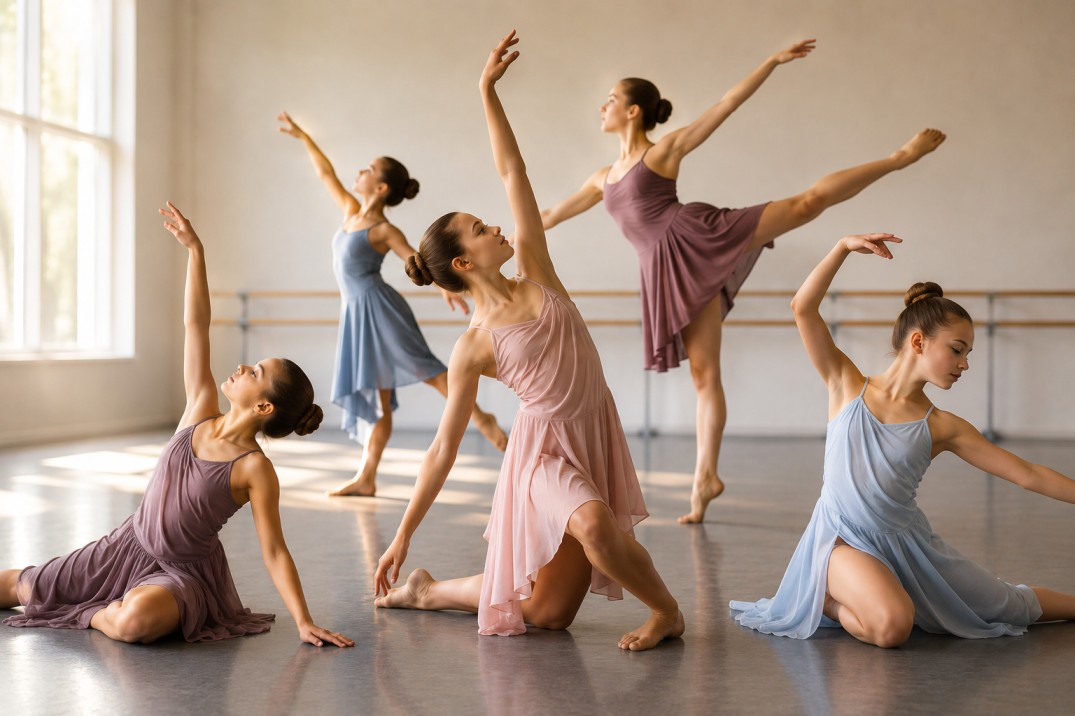
Contemporary dance combines technique with personal interpretation. A teen learns a real skill and also makes it their own. Progress usually comes from working on small challenges, not from getting everything right the first time. That makes confidence something you build through experience, not something you either have or don’t.
Learning Hard Skills One Step at a Time
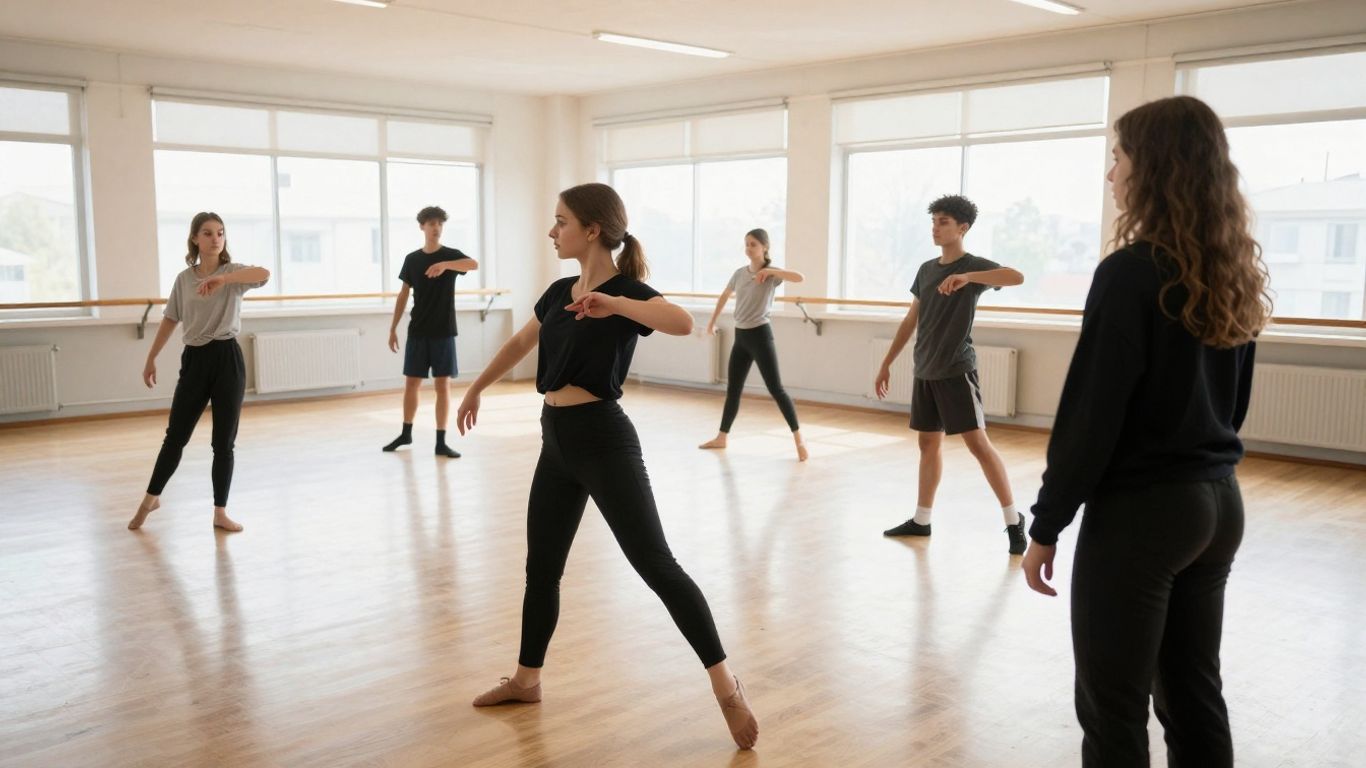
New choreography feels awkward before it feels familiar. A dancer may need to change direction, remember the order of steps, and follow the music, all at once. A good teacher breaks the work into small parts, lets students repeat each one, and then helps them put the pieces together.
This table shows how small class experiences can connect to confidence:
| Class experience | What your teen works on | How it can build confidence |
|---|---|---|
| Learning a phrase | Memory and coordination | Seeing a sequence become familiar |
| Repeating a movement | Patience and focus | Noticing improvement over time |
| Getting feedback | Listening and adjusting | Trying again with a clear next step |
| Working in a group | Awareness and teamwork | Feeling part of something shared |
Every teen is different, so this is not a promise. It is a reminder to notice specific efforts, like trying again or asking a question, instead of judging only by how polished a dance looks.
Feeling Strong and Comfortable in Your Body
Contemporary dance asks dancers to notice their balance, strength, energy, and the space around them. This is different from expecting a certain body shape or comparing dancers to each other. In class, the focus is on what the body can do: smooth transitions, steady balance, and moving with purpose.
For some teens, learning how their body moves helps them feel curious about it instead of critical. Everyone’s experience is different. A good teacher keeps movement safe and adjustable so each dancer can work at their own level.
Performing and Sharing Your Work
Sharing a dance with others can be a big challenge, but it is not the only sign of confidence. Some teens love to perform. Others need more time, or get more out of class practice and creative work. When performing is offered with encouragement and not pressure, a teen can choose if and when to take part.
Dancers who want a goal can work toward our Year-End Showcase in June, held in Hamilton. Our recital program gives every dancer a chance to share their progress with family and friends. For a nervous teen, the biggest step is often just agreeing to try something that once felt scary.
Dance for Self-Expression for Teens
Dance gives teens a way to communicate without having to talk. Contemporary dance leaves room for interpretation, so students can respond to music, images, or ideas in their own way. That does not mean the class has no structure. The teacher provides a clear plan and leaves space inside it for personal choices.
Movement as a Way to Say What Words Can’t
Some feelings are hard to put into words, especially when a teen is still figuring them out. Moving to music lets teens express a feeling without having to explain it to the group. A dancer might explore the difference between stillness and energy, or use a change of direction to shape a phrase.
Music shapes how a dance feels, too. Our guide on how teachers choose music for lyrical dance shows what that choice teaches young dancers about mood and expression. The goal is not to decide what a teen’s movement means. It is to let them decide what it means, or whether it needs to mean anything at all.
Improvisation, Choreography, and Finding Your Own Style
Improvisation (making up movement on the spot) and choreography let teens make creative choices in a safe setting. They might start from a prompt, repeat a phrase in a different way, or add an idea to a group dance. Teens who are new to creative movement can start with simple ideas like these:
- choose one quality, such as light, heavy, or quick
- repeat a simple gesture and change its direction
- react to a change in the music with a pause or a shift
- build a short phrase from movements that feel comfortable
These are starting points, not rules. Over time, a teen finds out which kinds of movement feel natural and which ones they want to explore. Self-expression stops feeling like a test with a right answer and starts feeling like trying new things.
What the Research Says About Dance and Teen Wellbeing
The research is encouraging, but it is limited. It does not support guarantees.
A 2018 review by Schwender and colleagues in Frontiers in Psychology looked at studies on dance and how people see themselves. In some studies, children and teens showed gains in how they feel about their bodies, trust in themselves, self-esteem, self-expression, and how they rate their own dance skills. Studies that used numbers mainly showed gains in how teens see their bodies.
The review also has limits. Results on self-esteem and self-efficacy (believing you can do things) were mixed. The authors said the evidence for each area is weak because there were few studies, results did not always agree, and some studies had design problems. Their conclusion was that dance may help strengthen how teens see themselves. That is not the same as proof.
A 2022 review in Frontiers in Physiology looked at the physical and mental benefits of dance for children and teens. It describes dance as a good option for physical activity for young people.
So the sensible view is that dance can be one part of a teen’s wellbeing, and results will differ from teen to teen.
You can also watch for everyday signs. Does your teen want to go back? Do they talk about what they learned? Do they seem more comfortable with the group? These signs do not prove dance caused a change, but they can help you decide if the class is a good fit.
What Contemporary Dance for Teens Looks Like at CM Dancing
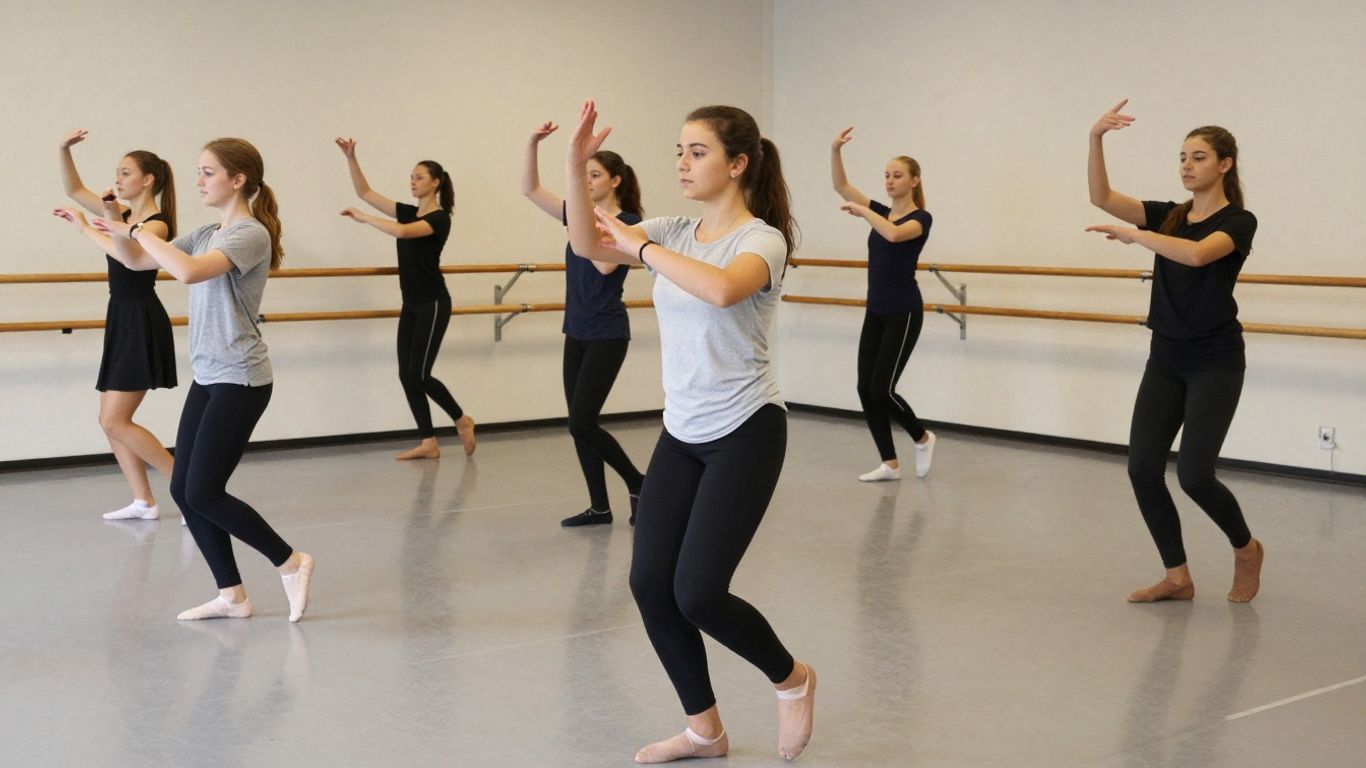
Our contemporary dance for kids and teens is a structured, age-appropriate program that builds confidence, coordination, and musicality in a supportive setting. Teens work on rhythm, timing, and movement basics, along with technique that keeps growing the longer they stay. The choreography is designed to feel achievable, so a dancer leaves class feeling proud of what they did, not behind.
Our approach comes from over two decades of teaching in Hamilton. We believe progress comes from consistency and encouragement, not perfection, and we treat every dancer with kindness and patience. You do not need dance experience or special flexibility to start. That matters for teens who worry they are “too late” or “not good enough” to begin.
Teens who want a sharper, more performance-style feel can add our Contemporary Jazz option, which combines expressive movement with clean lines and stage-style choreography. Many dancers do both to build versatility. You can learn more about our jazz dance classes, and our guide to how jazz technique progresses from ages 5 to 13 explains what dancers build over the years. Teens who like flowing, emotional movement may also enjoy our lyrical classes.
Classes take place in our five fully equipped studios, which have sprung flooring, marley dance surfaces, and climate control. Our facility also has a comfortable waiting area with TV viewing into Studios A and B, so parents can stay close without being in the room. Our recreational and competitive programs let teens choose between a relaxed pace and a more intense path, and our age groups shows where your teen fits.
A Supportive Space for Teens Who Feel Self-Conscious
Walking into a new class can feel scary, especially if your teen worries about being watched or falling behind. A good studio gives students room to ask questions, make mistakes, and learn without being compared to others. At CM Dancing, our teachers explain movement clearly and give dancers time to repeat it until it clicks, so a teen who is still learning is not singled out.
Shy dancers often warm up slowly, and that pace is normal. We wrote about this in our guide on whether a child is too young or too shy to start tap, and much of it applies to teens too. Before you sign up, ask any studio how the teacher introduces new movement, whether beginners are welcome, and what happens if a dancer needs a change to an exercise. Afterwards, give your teen space to say what felt easy or awkward, without turning it into a review of how they did.
Is Contemporary Dance Right for Your Teen? Start With a Trial Class
Contemporary dance suits teens who are curious about music, movement, storytelling, or creative ideas, but no style is right for everyone. If your teen is not sure, they can also look at other styles, like hip hop dance class. Our guide to hip hop dance levels explains how classes are set up from beginner to advanced. Your teen does not need dance experience or a clear artistic style to try a beginner class.
We offer a free, no-obligation trial class, so your teen can meet the real teacher, see the room, and try the routine before you register for a term. Before the visit, ask your teen what they hope to get from it. They might want to move more, learn choreography, meet people, or just see what contemporary dance is like. During class, notice how they react to the music, the teacher’s directions, and the pace. Some teens jump right in, and others watch first. Both are normal.
Afterwards, skip “Were you good?” and try open questions like these: What did you enjoy? What felt uncomfortable? Would you like to go again? A hesitant answer does not mean the class failed, because a new place can take time to get used to. If the class feels unwelcoming or does not interest them, it is fine to try something else. To book a trial, use our Schedule and Calendar, contact us, or call us.
How Parents Can Support Their Teen’s Confidence
Your support helps your teen try dance without feeling they have to prove anything. Show interest in what they are learning, but let them decide how much to share. Confidence is personal. The goal is to help your teen find activities where they can learn and feel respected, not to have them perform for your approval.
Praise effort in specific terms. You might say they kept working on a tricky phrase, tried a new movement, or made a thoughtful choice while improvising. Try not to compare them with siblings, classmates, or dancers online, even when you mean it kindly. Comparisons take attention away from your teen’s own progress.
Keep practical help simple: help with scheduling, make sure they have what the class needs, and check in as the weeks go by. If your teen wants to stop, listen to their reasons before deciding whether they need more time or a different activity. The best measure is whether they feel safe, interested, and free to be themselves, not whether they become a confident performer.
Conclusion
Contemporary dance can give your teen a steady place to practise skills, explore ideas, and share movement on their own terms. Confidence may grow through small, repeated experiences, especially when the teaching is supportive, and the class feels like a genuine fit. A trial session and an open conversation can help you and your teen decide whether it is worth continuing.
Frequently Asked Questions
Can a teen start contemporary dance with no experience?
Yes. Many classes welcome beginners, though expectations vary, so ask the instructor about experience levels before your teen attends. A class that explains movements clearly and allows time to practise can make the first visit less intimidating.
Does contemporary dance help every teen feel more confident?
No activity affects everyone in the same way. Some teens enjoy the creative challenge or group setting, while others may not connect with the style. Look for your teen’s own signs of comfort and interest rather than expecting a particular result.
What should a teen wear to a contemporary dance class?
Clothing should generally allow comfortable movement, but each class may have its own requirements. Ask the studio what to wear and whether particular footwear is needed before the first session.
Is contemporary dance good for shy teens?
It can be worth trying, but being shy does not mean a teen needs to change. A supportive class may give them a way to participate gradually, with opportunities to observe, practise, and join in at a pace that feels manageable.
How often should a teen take dance classes?
There is no single schedule that suits every teen. Consider the class expectations alongside school, rest, other activities, and your teen’s interest. The right frequency is one they can manage without feeling overwhelmed.
Does a teen have to perform in front of an audience?
Not necessarily. Performance opportunities differ by class, so ask about them in advance. Your teen may prefer learning in class, and any decision to perform should be discussed in a way that respects their comfort and readiness.
How can I tell if a dance class is a good fit?
Ask your teen how the instructor, pace, and group felt, and whether they would like to return. A good fit does not mean every moment feels easy, but your teen should feel respected and able to learn without undue pressure.