Choosing music for a lyrical dance class is about more than finding a beautiful or emotional song. The right piece of music gives dancers something to respond to through movement while matching their age, experience, technical ability, and the purpose of the choreography.
For children, this process can be especially valuable. A carefully selected song can help dancers understand musical changes, develop timing, express emotions, remember choreography, and connect movement with storytelling.
Understanding lyrical dance music selection also gives parents a better idea of what happens behind the scenes when a teacher chooses music for a class or performance.
Key Takeaways
- Teachers consider lyrics, tempo, musical structure, emotional tone, and age appropriateness when choosing lyrical dance music.
- The right song gives dancers opportunities to respond to different musical phrases and dynamics.
- Children learn to listen to music rather than simply count dance steps.
- Music interpretation helps dancers connect movement with rhythm, phrasing, and emotion.
- Song selection can influence how comfortable and confident a child feels performing choreography.
- Lyrical dance teaches children to connect technique with musicality and expression.
- A suitable song should support the dancer and choreography rather than make the routine unnecessarily complicated.
What Makes a Good Lyrical Dance Song?
A good lyrical dance song gives dancers enough musical and emotional material to work with. It doesn’t necessarily have to be slow or sad, and it doesn’t need dramatic lyrics to create an effective routine.
Teachers can look for music with clear phrasing, changes in dynamics, interesting musical sections, and an emotional quality that dancers can understand.
Lyrics and Storytelling
Lyrics can provide inspiration for choreography because they may suggest an emotion, memory, relationship, idea, or story.
A teacher might use a particular phrase as inspiration for movement or build part of a routine around a recurring idea in the song.
For children, the meaning of the lyrics also matters. Music should be appropriate for the dancers’ age and give them a concept they can understand.
Tempo and Musical Structure
Tempo affects how dancers move.
A slower section may allow time for controlled movements, extensions, pauses, or sustained choreography. A faster section may encourage larger movements, travelling combinations, or changes in energy.
Teachers can also use verses, choruses, bridges, and instrumental sections to create different stages within a routine.
Emotional Tone
Lyrical dance often involves emotional connection, but that doesn’t mean every routine needs to be sad.
A song might communicate happiness, hope, determination, excitement, friendship, change, or reflection.
The emotional tone gives dancers a reason to make choices about how they move and perform.
How Teachers Choose Music for Different Ages
The same song isn’t necessarily appropriate for every age group. Teachers need to consider whether young dancers can understand the song’s message and respond to its musical qualities.
This is one reason choosing songs for lyrical dance requires more thought than simply selecting a popular song.
Younger Dancers
For younger children, teachers may look for songs with clear musical phrasing, understandable themes, and an emotional quality that isn’t overly complicated.
The choreography can then focus on simple ways to respond to the music, such as changing direction, pausing, extending a movement, or increasing energy during a stronger section.
Older Children and Teens
Older dancers may be ready for music with more complex emotional themes or musical structures.
They can also handle choreography that requires greater attention to subtle changes in timing, dynamics, and musical phrasing.
As dancers gain experience, the song becomes less something they simply perform to and more something they actively interpret.
How Music Guides Lyrical Dance Choreography
Once a teacher has selected a song, the music can influence almost every part of the choreography.
Movement isn’t created separately and then simply placed over the music. Instead, teachers can use specific musical moments to shape the timing, direction, energy, and quality of movement.
Matching Movement to Musical Phrasing
Musical phrasing refers to how sections of music are organized and expressed.
A dancer might perform a sequence across an entire musical phrase rather than stopping after every individual count.
This helps choreography feel connected rather than like a collection of unrelated steps.
Children gradually learn to recognize when a musical phrase begins, develops, and resolves.
Responding to Changes in Dynamics
Music doesn’t stay at the same intensity throughout a song.
It may become softer, louder, slower, stronger, or more energetic. These changes give dancers opportunities to change the quality of their movement.
For example, a quieter section might encourage smaller, controlled movements, while a stronger section could lead into larger travelling movements or a more powerful phrase.
Learning to recognize these changes is an important part of music interpretation in lyrical dance.
What Children Learn Through Music Interpretation
Learning choreography is only one part of lyrical dance. Children also learn how to listen and make movement choices based on what they hear.
That process can help dancers become more independent performers.
Listening Beyond the Beat
Young dancers often begin by learning to stay on the beat. As they progress, they can learn to listen for more than the basic rhythm.
They may begin noticing changes in instruments, vocals, volume, phrasing, and tempo.
Instead of thinking only about “what step comes next,” they start thinking about how the movement should fit the music.
Understanding Emotion Through Movement
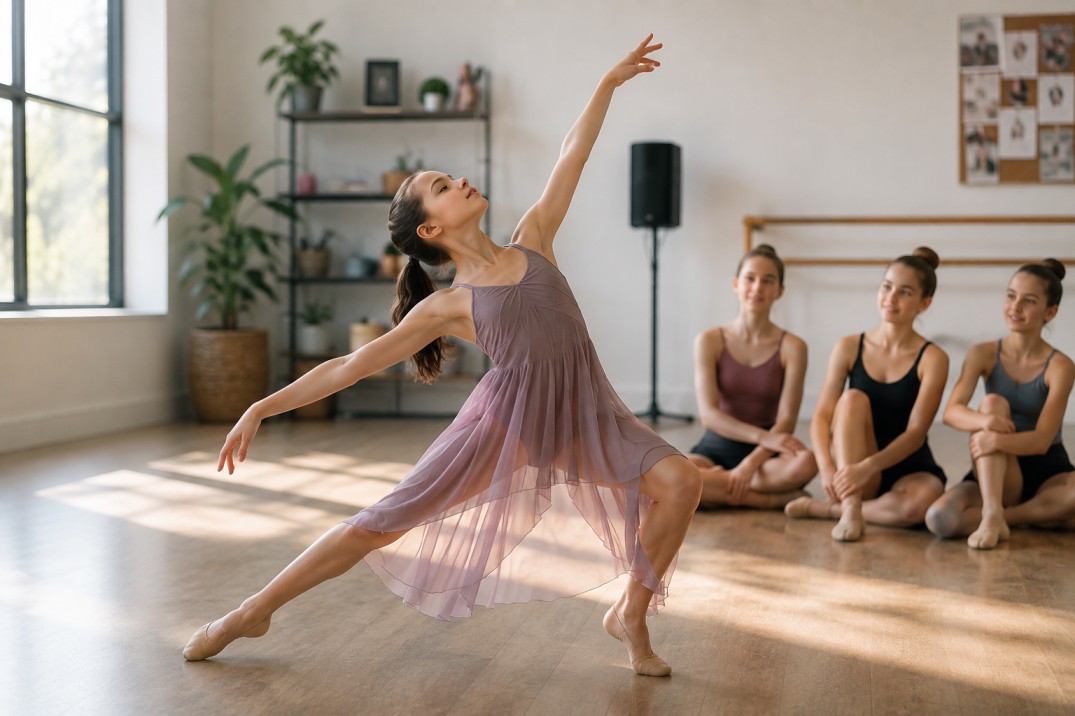
Lyrical dance gives children an opportunity to connect emotion with physical movement.
A dancer may learn that the same step can look completely different depending on its energy, timing, and intention.
A soft movement can communicate something different from a sharp or powerful movement, even when the basic technique is similar.
This is where lyrical dance emotional connection to music becomes particularly valuable. Dancers learn that expression isn’t only about facial expressions; it can also be communicated through timing, energy, posture, and movement quality.
Research and educational work from The Open University also discusses how dance can support children’s understanding of emotions and social-emotional learning.
For parents interested in this aspect of dance education, The Open University: Emotion in Motion provides additional educational context.
Why Song Choice Can Affect a Child’s Performance
A song that fits the dancer can make it easier for them to connect with the choreography.
When children understand the mood and can respond naturally to the music, they may feel more comfortable performing the routine.
On the other hand, music that is too complicated, emotionally distant, or unsuitable for the dancer’s age can make it harder for them to understand what the choreography is communicating.
Confidence Comes From Understanding
Children don’t always need to know exactly what a song means before they can perform it well. However, they should have enough context to understand the feeling or idea behind the choreography.
When dancers understand what they are trying to communicate, their movements can become more intentional.
This can be particularly helpful for children who are still developing confidence in front of others.
Music Gives Dancers Something to Respond To
A strong lyrical song provides moments that dancers can hear and respond to.
A pause might become a still moment. A change in the music might signal a change in direction. A stronger vocal phrase might lead into a larger movement sequence.
These relationships help children understand why choreography is structured in a particular way.
How Lyrical Dance Builds Musicality
Musicality is the ability to move in a way that responds meaningfully to music. It develops over time through listening, repetition, observation, and practice.
Lyrical dance provides many opportunities for children to develop this skill because movement is closely connected to musical phrasing and emotion.
Learning Timing and Control
Dancers learn that being musical isn’t always about moving faster or slower.
Sometimes the most effective choice is to hold a movement, wait for a musical change, or finish a movement exactly as a phrase resolves.
These moments teach children control and timing.
Developing Individual Interpretation
As dancers gain experience, they may begin making small performance choices of their own.
Two dancers performing the same choreography may interpret a musical phrase slightly differently while still following the teacher’s choreography.
That individuality is part of becoming a more confident dancer.
How Lyrical Dance Connects Music, Movement, and Storytelling
Lyrical dance combines technical movement with interpretation. The music provides the emotional and musical framework, while the choreography gives dancers physical ways to communicate an idea.
This connection is one reason lyrical dance can be a meaningful style for children.
From Listening to Moving
A dancer first hears the music.
Then they learn to recognize its rhythm, phrasing, and changes.
Finally, they learn to translate those details into movement.
That progression can turn a routine from a series of memorized steps into a performance with intention.
From Movement to Meaning
The goal isn’t for every dancer to create a completely different story.
Instead, teachers can help children understand the intention behind the choreography while giving them room to develop confidence and personal expression.
This balance allows dancers to work within a structured routine while still developing their own performance quality.
How CM Dancing Approaches Lyrical Dance
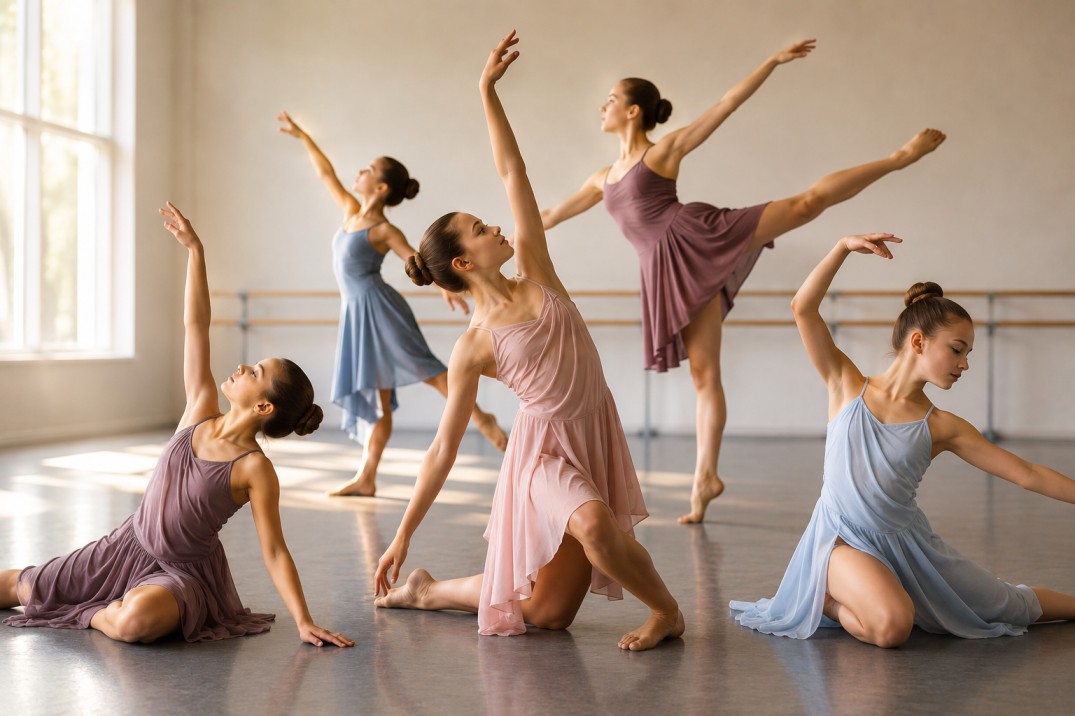
Lyrical dance combines elements of ballet and jazz with musical interpretation and storytelling. CM Dancing program focuses on control, timing, musicality, and emotional nuance while welcoming both beginners and experienced dancers.
Building Technique Alongside Expression
Expression works best when it has a strong technical foundation.
Dancers need control, coordination, balance, and awareness of their movements before they can consistently communicate musical ideas through choreography.
This is why lyrical training can involve both technical exercises and expressive choreography.
Creating a Supportive Learning Environment
Children can develop performance skills more comfortably when they have an environment where they can make mistakes, receive corrections, and continue trying.
CM Dancing describes its dance community as welcoming dancers who are just starting out as well as those with years of experience.
Parents interested in Hamilton lyrical dance classes can learn more about the program and training options.
Lyrical Dance and Other Styles
Lyrical dance shares some technical foundations with other styles, particularly ballet and jazz. Studying different styles can give dancers additional opportunities to develop movement quality, control, and musicality.
CM Dancing’s existing article about jazz and lyrical dance benefits also discusses how these styles can support children’s physical development, confidence, creativity, and self-expression.
The important difference is that each style gives dancers a different way to respond to music and movement.
Helping Your Child Connect With Music Through Dance
Lyrical dance gives children more than choreography to memorize. Through carefully selected music, dancers learn to listen for changes, understand musical phrasing, connect movement with emotion, and communicate ideas through performance.
For parents, understanding lyrical dance music selection can also make it easier to appreciate what happens during class. The song is not simply background music. It can become part of how a teacher introduces musicality, timing, expression, and storytelling.
If you’re considering lyrical dance for your child, contact our dance studio to discuss the program and find an appropriate class.
FAQs About Lyrical Dance Music Selection
How do teachers choose songs for lyrical dance?
Teachers can consider several factors, including lyrics, musical structure, tempo, emotional tone, age appropriateness, and how well the music supports the intended choreography.
What makes a song good for lyrical dance?
A strong lyrical dance song provides musical and emotional changes that dancers can respond to. Clear phrasing, appropriate lyrics, changes in dynamics, and a meaningful theme can all help support choreography.
Why are lyrics important in lyrical dance?
Lyrics can provide context and inspiration for choreography. They can help dancers understand the idea behind a routine and give them something specific to connect with while performing.
Do lyrical dance songs always need to be sad?
No. Lyrical dance can communicate many different emotions. Music may express happiness, hope, excitement, determination, reflection, or other feelings. The important factor is whether the music gives dancers something meaningful to interpret.
What does music interpretation mean in lyrical dance?
Music interpretation means responding to the details of a song through movement. Dancers may change their timing, energy, dynamics, or movement quality based on what they hear.
How does lyrical dance help children develop musicality?
Lyrical dance encourages children to listen for rhythm, phrasing, dynamics, tempo changes, and other musical details. Over time, they learn to use those details to make their movement more intentional.
Can beginners learn lyrical dance?
Yes. Beginners can learn lyrical dance when the class is appropriate for their age and experience. Technical and expressive skills are developed gradually through instruction and practice.
Is lyrical dance only about emotional expression?
No. Emotional expression is one part of lyrical dance. Dancers also work on technique, control, coordination, musicality, timing, flexibility, and choreography.