Few things cause more confusion for new dance families than the shoe list. Your child is excited about a first class, and then you find out tap, jazz, ballet, hip hop, and acro each call for different footwear, and a pair that works for one style can be wrong for another. Getting it wrong is easy and common, and it usually means a second trip to the store.
This guide explains dance shoes by style in plain language: what each shoe is built to do, what to look for when you try it on, and how to fit growing feet. Your studio’s own requirements always come first, and at CM Dancing you can find ours on the Dress Code. Use this article to understand the reasons behind the list, so you can shop with confidence.
Key takeaways
- Each style asks something different of the foot, so no single shoe works for every class.
- Tap shoes have metal taps, jazz shoes are built to flex, ballet shoes fit close, and hip hop calls for clean, flexible indoor sneakers.
- Acro is often done barefoot, but some classes use acro shoes, so confirm with your studio before buying.
- Dance shoes should fit your child’s foot today. Extra growing room makes them slip and wrinkle.
- Your studio’s requirements outrank any general guide, including this one.
Dance Shoes by Style: Why the Right Shoe Matters
A dance shoe is a tool for a specific job. A tap shoe makes sound, a ballet slipper lets the foot show its shape, a jazz shoe supports quick turns and sliding, and a hip hop sneaker gives grip and cushion for grounded movement. Put a child in the wrong one and the class gets harder: steps feel clumsy, feet slip, and the child often loses confidence.
Floors matter too. Our five studios have sprung flooring and marley dance surfaces, and grit carried in on outdoor shoes can scratch surfaces like these, which is why many studios ask for indoor-only footwear. Beyond that, a well-chosen shoe keeps your child’s attention on the music and the teacher instead of on their feet.
Dance Shoe Chart: Tap, Jazz, Ballet, Hip Hop, and Acro at a Glance
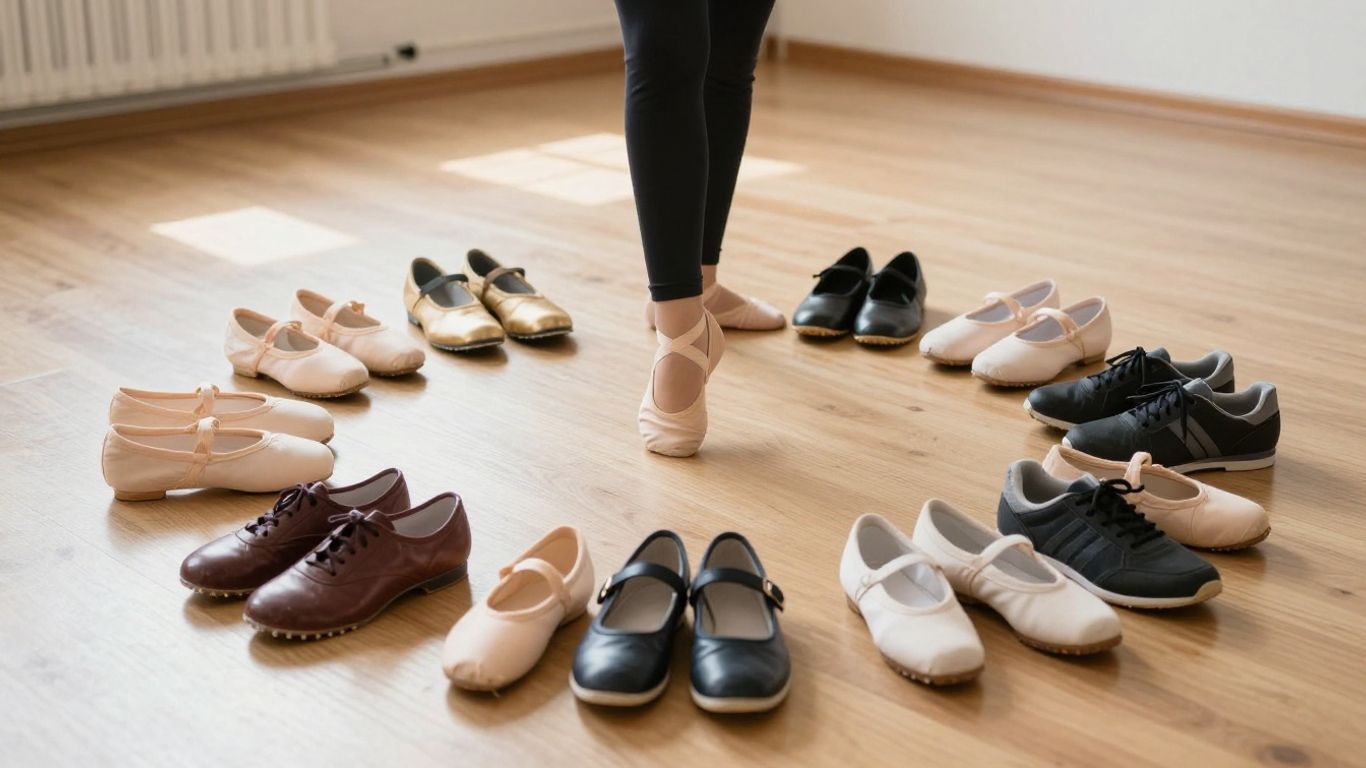
No single shoe suits every style, so here is how the five compare. Treat it as a starting point and follow your studio’s list for the final choice.
| Style | Common footwear | Built for | What to check |
|---|---|---|---|
| Tap | Tap shoes with metal toe and heel taps | Making clear, crisp sounds | Fastening (lace-up or buckle), snug heel, secure taps |
| Jazz | Slip-on or lace-up jazz shoes | Flexibility, turns, and sliding | Split-sole or full-sole, secure fit |
| Ballet | Canvas or leather ballet slippers | Showing foot shape and pointing the toes | Close fit, sole type, elastics |
| Hip hop | Clean, flexible indoor sneakers | Grounded, grippy, cushioned movement | Flat, flexible sole and indoor-only use |
| Acro | Bare feet, or acro shoes in some classes | Feeling the floor during tumbling | The teacher’s preference and the class activity |
If you want to see how these styles differ in class, browse our full list of classes to compare the design differences between them.
What Changes Between Styles: Sole, Grip, and Fit
Three features set dance shoes apart from everyday shoes. The first is the sole: a tap shoe has a firm sole with taps attached, a ballet shoe has a thin, soft one, and a jazz shoe has a sole that is meant to slide as well as flex. The second is grip: sneakers for hip hop need enough traction to stay controlled without sticking to the floor, while jazz and ballet shoes are meant to move across the surface.
The third is fit. Dance shoes should hold the foot snugly, because the foot is moving, sliding, and pointing all class. If the shoe slides or bunches, the dancer has to grip with their toes to stay in it, and that gets tiring fast. For class-specific requirements.
What Shoes for Tap, Jazz, and Ballet
Parents often ask what shoes for tap, jazz, and ballet they should buy, and the short answer is three different pairs. They are easy to mix up because all three look like “dance shoes,” but the soles, materials, and fit are different. A common first-week mix-up is a child arriving to a tap class in jazz shoes, which have no taps, so none of the sounds the class is about can happen. If you’re buying a first pair, confirm the exact type for your child’s class first.
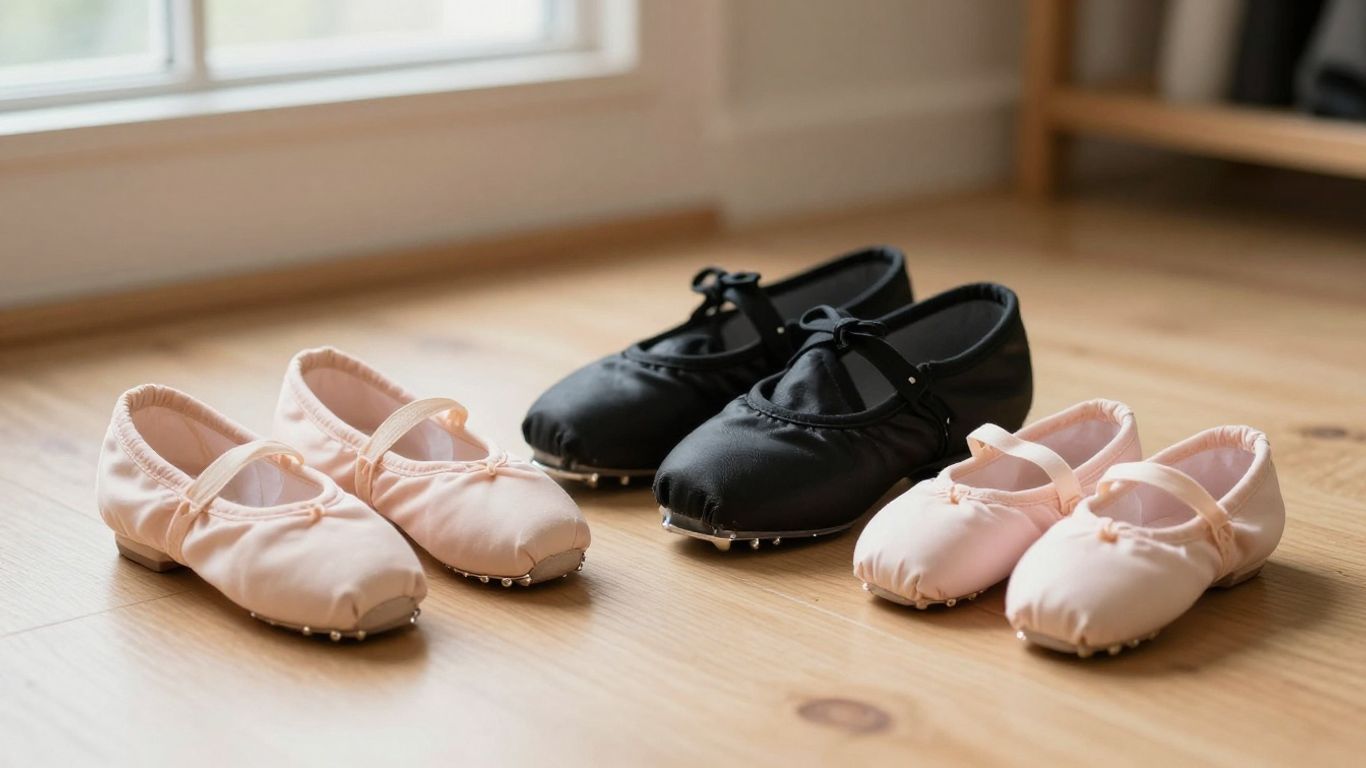
Tap Shoes: Lace-Up vs. Buckle, Metal Taps, and Beginner Fit
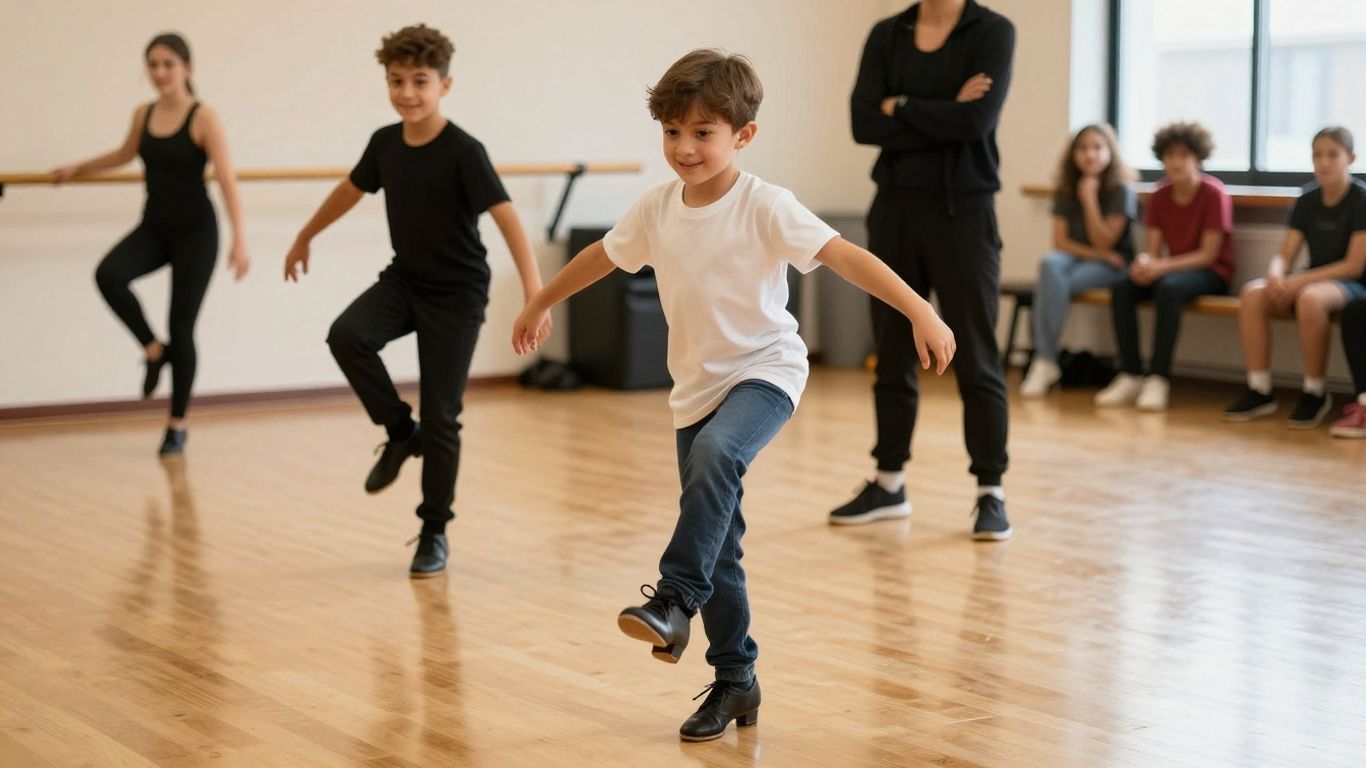
Tap shoes have metal plates, called taps, fixed to the toe and heel, and those plates create the sound. Most beginner styles fasten with laces or a buckle strap. Lace-ups hold the foot more firmly and suit dancers who can tie their own shoes, while buckle or Mary Jane styles are quicker for younger children to get on.
At CM Dancing, our beginner class, Tap 1 for ages 6 to 8, teaches dancers how different parts of the tap shoe make different sounds, so the shoe is part of what children learn to listen to. Whatever the fastening, the heel should stay snug, the taps should be firmly attached, and your child should be able to walk and stand comfortably. To see what students work on, read about our Hamilton tap classes.
Jazz Shoes: Slip-On vs. Lace-Up and Split-Sole vs. Full-Sole
Jazz shoes come in two main fastenings. Slip-on versions have stretchy panels and are easy for children to manage on their own. Lace-up versions stay more securely on the foot, which can help with fast footwork.
The other choice is the sole. A split-sole shoe has a gap under the arch, so the foot can bend and point more freely. A full-sole shoe has one continuous sole that gives a bit more structure. Both are used, and the right pair depends on the class and the teacher.
When you try a pair on, have your child stand, point, and flex. The shoe should feel secure at the heel with no bulging at the toes. You can see how jazz progresses in our jazz classes and in our guide to jazz technique by age.
Ballet Shoes: Canvas vs. Leather, Full-Sole vs. Split-Sole, and Elastics
Ballet slippers are usually canvas or leather. Canvas is lightweight and often costs less, while leather is durable and tends to mould to the foot over time. Like jazz shoes, they come with a full sole or a split sole, and beginners commonly start in whichever type the teacher recommends.
Most slippers need elastics sewn across the instep to keep them on. A well-fitted ballet shoe sits close to the foot like a sock, with no loose fabric at the heel or toes. Don’t buy a size up for growth, because the foot will shift and the shoe will wrinkle and slide. Learn about progression in our ballet classes and our guide to ballet levels for kids.
Hip Hop Dance Sneakers for Kids
Hip hop is the one style where an everyday shoe type, the sneaker, is usually acceptable, but not any sneaker. Studios commonly ask for clean sneakers that are worn only indoors, partly to protect the floor and partly because outdoor grit changes how a shoe grips. If you’re shopping for hip hop dance sneakers kids can wear to class, look for a pair you’ll keep for the studio only. Our hip hop classes and our guide to hip hop dance levels explain what dancers work on at each stage.
What to Look For in Indoor Dance Sneakers
The best pair for class is lightweight, flexible, and comfortable from the first wear. Look for a sole that bends easily at the ball of the foot and isn’t heavily treaded, since thick, grippy soles can catch on the floor during slides and turns. The heel should hold firmly, and laces should be tied securely, as loose laces are a trip risk during fast movement.
Check these when you try them on:
- The toes have room to move but the heel doesn’t lift.
- The shoe bends where the foot bends.
- The sole is clean and suited to indoor use.
- Your child can jump and land comfortably.
Keep the pair for class only, and wipe the soles before each session if the studio asks for it.
Acro Dance Shoes: A Footwear Guide
Acro combines dance with tumbling skills such as rolls, bridges, and cartwheels. Because of that, footwear rules differ more from studio to studio than in any other style. Many acro classes are done barefoot, so dancers can feel the floor and grip with their feet. Others allow or request acro shoes, which are thin and light and cover part of the foot.
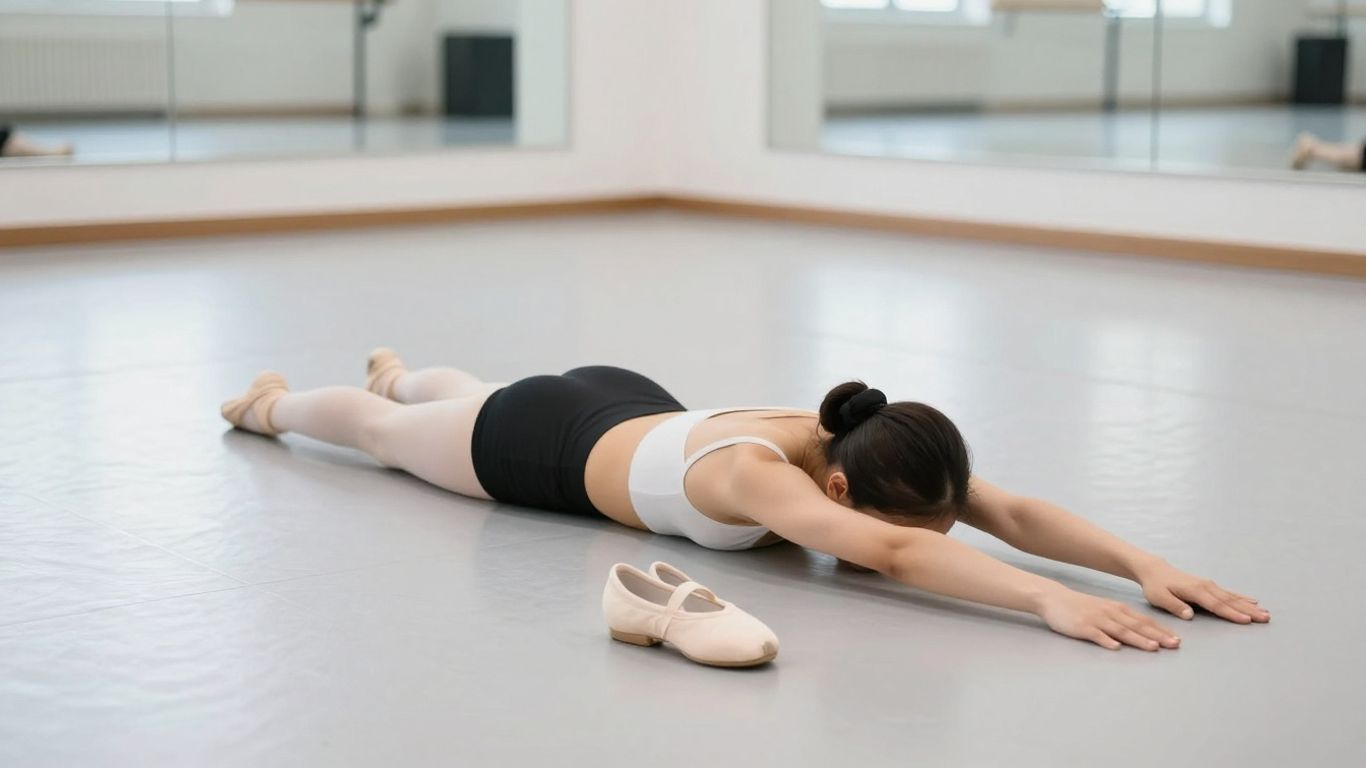
Barefoot vs. Acro Shoes and When Each Is Used
Bare feet give the most floor feel and are the usual choice for tumbling, since regular dance shoes can make a child slip or twist. Acro shoes can help when a class wants some protection or extra smoothness on a surface, but they should be thin, flexible, and snug, never bulky.
Never assume a shoe from another class will work in acro. A jazz or ballet shoe is built for sliding, which isn’t what you want during a cartwheel. Ask your teacher what the group wears before buying anything. You can see what young dancers work on in our acro classes.
How to Fit and Buy Dance Shoes for Growing Kids
The biggest buying mistake isn’t picking the wrong style. It’s buying the wrong size. Many parents buy a size up so the shoes last longer, which is understandable but works against dance. A shoe that’s too big slips, wrinkles, and bends in the wrong place.
Canadian foot-health sources give the same advice for children’s shoes in general. The Canadian Paediatric Society says children should always try shoes on before buying and that shoes should fit snugly at the heel. A Canadian pedorthic guide adds that shoes should fit the foot’s current size, since extra growing room misaligns the shoe’s flex points with the foot’s and a shoe that’s too long can be a tripping hazard. Those points hold even more strongly for dance, where the foot has to feel every movement.
Sizing, Growing Room, and When to Replace Shoes
Try dance shoes on with the socks or tights your child will wear in class. The Canadian Paediatric Society notes that after age 3, a child’s feet grow about one size a year, so expect to recheck the fit more than once a season for younger dancers. Check that the heel stays put, the toes lie flat without curling, and nothing pinches or rubs.
Replace a pair when:
- the toes press the end of the shoe or your child says they feel tight
- the heel slips or the shoe twists on the foot
- the sole, taps, straps, or elastics are loose, cracked, or worn through
- your teacher says it no longer suits class
Growth spurts can make a comfortable pair too small quickly, so recheck the fit now and then rather than waiting for a set date.
Common Shoe-Buying Mistakes Parents Make
Most problems we see come from a short list of mix-ups:
- Buying a size up for growth. The shoe slips and wrinkles, which makes class harder.
- Choosing by appearance. A shoe that looks right can still be the wrong type for the class.
- Using one pair for every class. Tap, jazz, and ballet need different shoes.
- Wearing hip hop sneakers outdoors. Grit gets onto the floor and onto the sole.
- Skipping the try-on when ordering online. Sizes vary between brands, so check the retailer’s size guide and return policy first.
A quick message to the studio before buying prevents nearly all of these, and we’re always happy to answer questions. You can contact us at any time.
Not Sure Which Shoe Your Child Needs? Start With a Trial Class
If your child is new to dance, you may not know which shoes to buy until you’ve seen a class. We offer a free, no-obligation trial class, so your child can try the real teacher, room, and routine before you register for a term. You’ll see what the style involves and can ask the teacher exactly what students wear.
Before the trial, check our Dress Code page so you know what to bring. After it, you’ll be able to buy with confidence, choosing a pair that fits snugly, suits the style, and matches your studio’s list. Current class times are on our Schedule and Calendar. If you’re unsure which program suits your child’s age, our age groups is a good place to start, or call us.
Conclusion
Choosing dance shoes by style comes down to matching the footwear to the class, the floor, and your child’s fit. Confirm the studio’s requirements, try shoes on carefully, and reassess as growing feet change. With a well-fitting pair, your child can focus more comfortably on learning and enjoying the dance.
Frequently Asked Questions
Should children wear regular shoes to dance class?
Only if the studio says they are suitable. Many classes have specific footwear requirements, so check before your child attends.
How much growing room should dance shoes have?
They should have comfortable toe room but fit securely. If the foot slides or the shoe twists, it may be too large.
Do tap shoes need metal taps?
Tap shoes are made with metal taps, but the type of shoe or tap your child needs can vary. Ask the teacher what the class requires.
Are split-sole jazz shoes better for beginners?
Not necessarily. Split-sole and full-sole shoes feel different, and the best option depends on the dancer and the class guidance.
Can a child use one pair of shoes for multiple dance styles?
Usually, each style has different footwear needs. Check with the studio before using one pair across more than one class.
Should children wear socks with ballet slippers?
Follow the studio’s instructions about socks or tights. Try the shoes on with the layers your child will wear in class.
When should dance shoes be replaced?
Replace them when they no longer fit securely, feel uncomfortable, or have worn or damaged parts that affect their use.