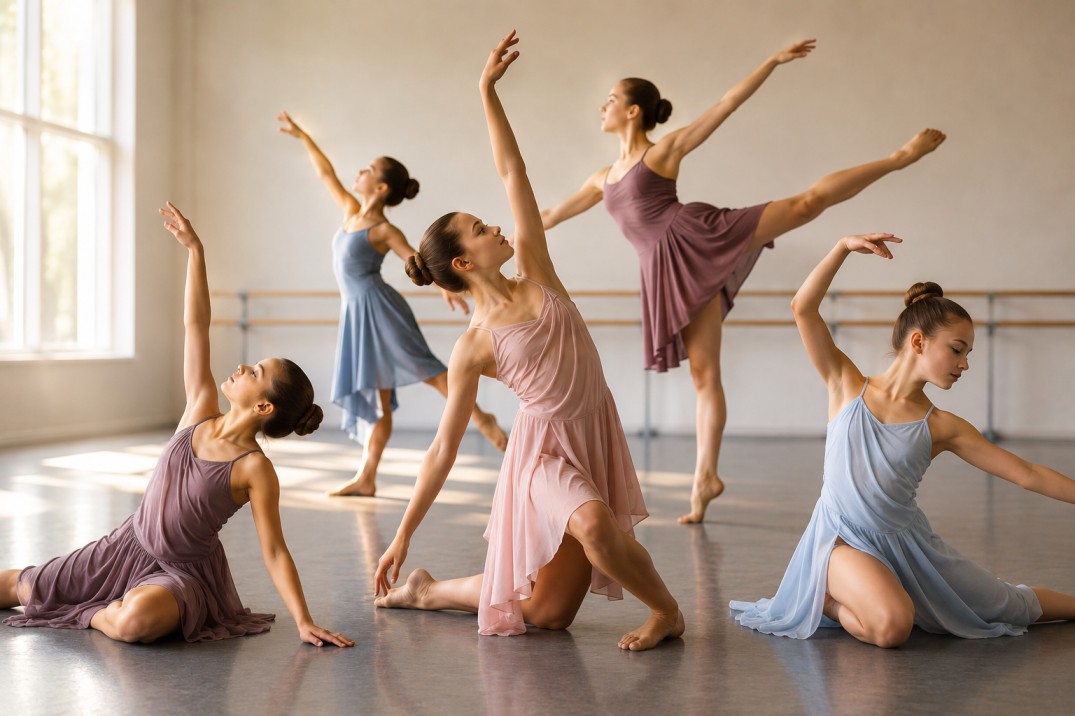
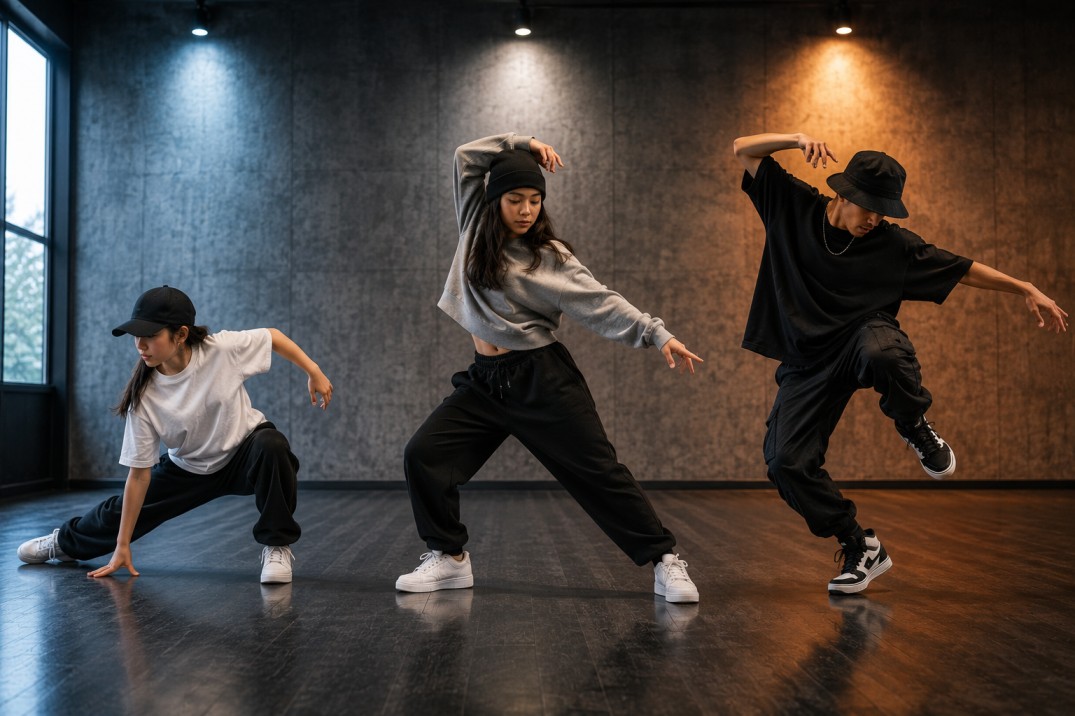
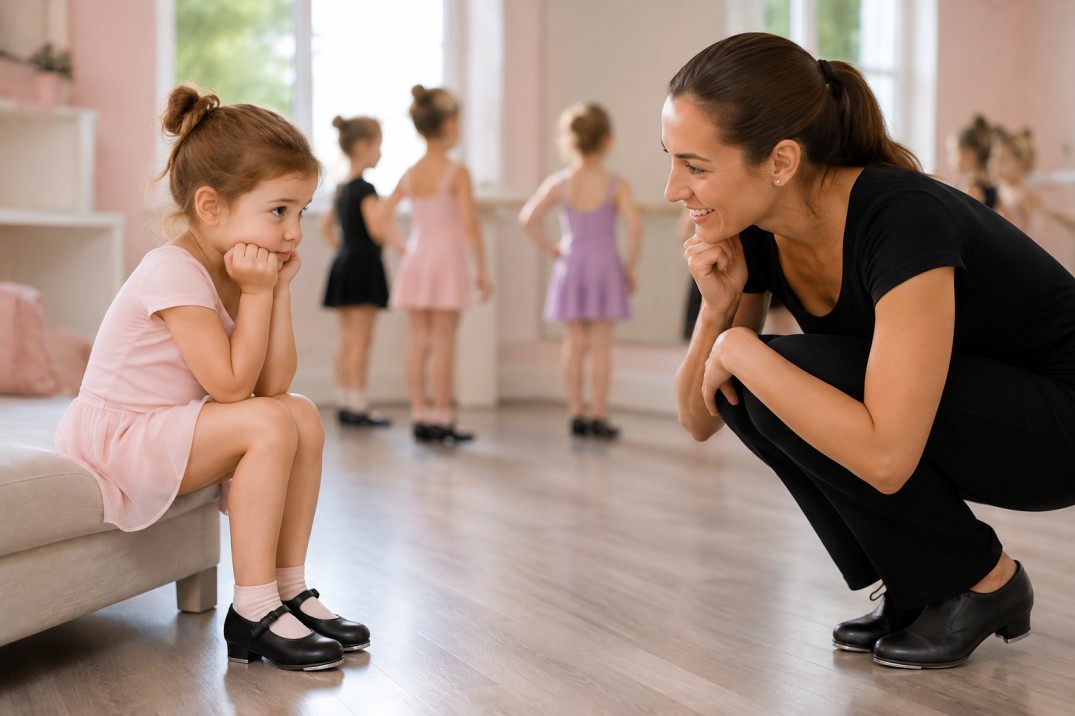
Starting jazz dance at a young age gives children the opportunity to develop coordination, musicality, confidence, and movement skills over time. But the way those skills are introduced should change as children grow.
A five-year-old learning to follow a beat and coordinate simple movements has different needs from a 13-year-old who may be ready for more complex choreography and technical refinement. Understanding jazz dance technique by age can help parents know what to expect from different stages of training and choose a class that provides an appropriate level of challenge.
Key Takeaways
- Jazz technique develops gradually as children grow and gain experience.
- Ages 5–6 generally focus on rhythm, coordination, basic movements, and confidence.
- Ages 7–9 can begin developing stronger control, musicality, and choreography skills.
- Ages 10–11 may involve greater technical precision, balance, and more complex combinations.
- Ages 12–13 can focus more on technical consistency, musicality, choreography, and performance quality.
- Age is an important consideration, but previous dance experience also affects progression.
- Jazz dance levels for children should provide an appropriate challenge without overwhelming the dancer.
What Does Age-Appropriate Jazz Dance Technique Look Like?
There isn’t one universal checklist that every child should complete at a particular age. Children develop coordination, strength, flexibility, confidence, and movement skills at different rates.
For parents, age-appropriate jazz dance is less about mastering a specific number of steps and more about learning skills that match the child’s stage of development and experience.
Why Age Matters in Jazz Training
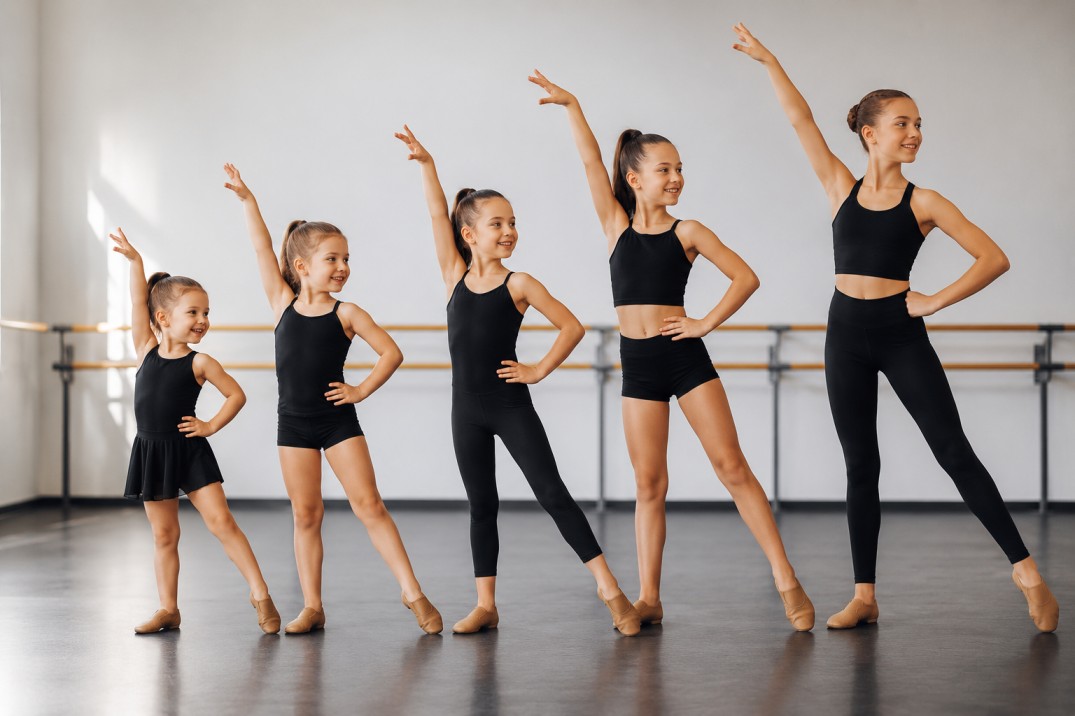
Younger dancers are still developing body awareness, balance, coordination, and the ability to follow instructions. Their classes may therefore use shorter combinations, repetition, and simple movements.
As children grow, they can gradually work with longer combinations, more detailed corrections, faster transitions, and greater technical demands.
This progression allows dancers to build a foundation before moving into more challenging material.
Why Experience Matters Too
Two children of the same age can have very different dance backgrounds.
A 10-year-old who has taken jazz for several years may be comfortable learning a longer combination, while another 10-year-old who is new to dance may benefit from starting with foundational movements.
Previous experience, coordination, musicality, choreography retention, confidence, and consistency can all influence a dancer’s readiness.
For a broader look at how age can influence dance class choices, parents can read our guide to dance classes by age.
Ages 5–6: Building the Foundations of Jazz
For children around five and six, jazz classes are primarily about creating a positive foundation for movement. At this stage, children are learning how to listen, follow instructions, recognize rhythm, and coordinate their bodies.
The goal isn’t to rush young dancers into advanced technique. Early jazz training should give them opportunities to become comfortable moving to music while developing the basic skills they will use later.
Core Skills at This Stage
Young dancers may begin working on:
- Basic jazz movements and positions
- Rhythm and musical timing
- Simple travelling movements
- Balance and coordination
- Basic stretches
- Arm and leg coordination
- Short choreography combinations
- Following instructions in a group
These skills may look simple, but they provide an important foundation for later training.
A child who learns to stay with the music, remember a short sequence, and coordinate different parts of their body is already developing skills that will support more complex choreography later.
What a Typical Class May Look Like
A class for this age group may use repetition, simple combinations, music, and movement activities to help children understand the fundamentals.
An instructor may demonstrate a movement several times before asking dancers to perform it independently. A short combination may also be repeated throughout the class rather than constantly introducing new material.
That repetition gives young dancers time to understand the movement and become more confident performing it.
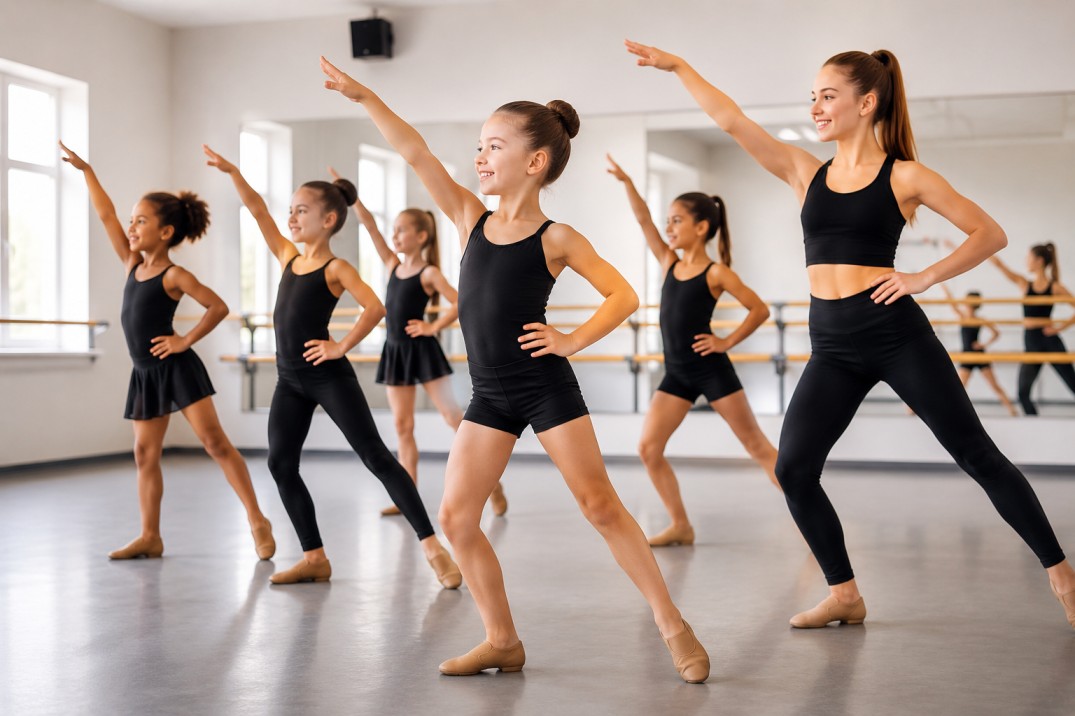
Ages 7–9: Developing Coordination and Musicality
Between approximately seven and nine, many children are ready to build on their early jazz foundations. They may be able to remember longer combinations, respond to musical changes, and coordinate several movements together.
This is an important stage of jazz dance progression for kids because dancers begin moving from learning individual steps toward connecting those steps into choreography.
Skills Children Begin Developing
At this stage, classes may place greater attention on:
- Body control
- Balance
- Rhythm and timing
- Direction changes
- Musicality
- Choreography retention
- Coordination
- Movement quality
Children may also begin receiving more specific corrections from their instructor.
Instead of simply learning whether a movement is correct, they can start understanding how to make it cleaner, more controlled, or better connected to the music.
Moving From Steps to Combinations
One noticeable change at this stage is the ability to connect individual movements into longer sequences.
A dancer may learn a combination that includes travelling steps, arm movements, changes in direction, and transitions. The challenge is remembering the order while staying with the music.
Parents interested in the wider benefits of jazz training can also read about jazz and lyrical dance and how these styles can support physical development, confidence, creativity, and self-expression.
Ages 10–11: Strengthening Jazz Dance Technique
Around ages 10 and 11, dancers with a foundation of consistent training may be ready for greater technical challenges. Classes can begin emphasizing precision, control, musicality, and more complex choreography.
This doesn’t mean every 10- or 11-year-old should automatically move into an advanced class. Progress should reflect the dancer’s actual abilities and experience.
Improving Control and Precision
As dancers become more experienced, instructors can pay closer attention to how movements are performed.
A dancer may be asked to improve posture, balance, lines, transitions, timing, or control rather than simply completing the choreography.
This is an important part of jazz dance technique by age because technical development involves making familiar movements more consistent and controlled.
Developing More Complex Choreography
Older children can often handle longer combinations and faster transitions than they could when they were younger.
They may also become more independent when learning choreography, remembering larger sections without needing to watch the instructor for every movement.
At this stage, musicality becomes increasingly important. Dancers can begin thinking about how their movements respond to changes in the music rather than simply counting through each step.
Ages 12–13: Refining Technique and Performance
By ages 12 and 13, dancers who have developed a strong foundation may be ready to refine their technique and performance skills further.
Classes can become more demanding, but progression should still be based on experience and readiness rather than age alone.
Building Technical Consistency
Older dancers may work on performing familiar movements with greater consistency.
That can include improving balance, control, flexibility, transitions, turns, jumps, and the quality of movement throughout a combination.
Rather than simply learning a movement and moving on, dancers may spend more time refining the details that affect the overall quality of their performance.
Developing Musicality and Performance Quality
At this stage, dancers can begin thinking more about how they communicate through movement.
Two dancers can perform the same choreography correctly while creating very different performances. Musicality, energy, dynamics, facial expression, confidence, and movement quality can all affect how choreography is presented.
This is an important part of progressing from simply learning choreography to performing it with greater confidence and individuality.
Why Jazz Dance Levels Can Differ by Experience
Age provides a useful framework for organizing classes, but it doesn’t tell the entire story. Children who are the same age can have very different levels of dance experience.
A child who has attended jazz consistently for several years may be ready for different challenges than a child of the same age who is attending their first dance class.
Why Two Children the Same Age May Need Different Classes
Previous dance experience can affect choreography retention, coordination, musicality, flexibility, and confidence.
For example, a 10-year-old starting jazz for the first time may benefit from foundational instruction, while another 10-year-old with several years of dance training may be ready for more complex combinations.
Neither dancer is necessarily ahead or behind. They simply have different starting points.
Signs Your Child May Be Ready for More Challenge
Parents can look for signs such as:
- Following choreography with less instructor prompting
- Remembering longer combinations
- Staying on beat consistently
- Applying corrections during class
- Maintaining focus throughout a class
- Performing movements with greater control
- Feeling comfortable learning new choreography
These signs don’t automatically mean a child needs to move to another level. They can provide useful points to discuss with the instructor.
How Jazz Technique Progresses Within Each Age Group
Even within the same age group, dancers can progress at different rates. One child may understand choreography quickly but need more time to develop flexibility or strength, while another may have strong physical control but need more practice remembering combinations.
For that reason, jazz dance progression for kids should allow room for individual development.
What Changes as Your Child Gains Experience?
As dancers become more comfortable with the basics, instructors can gradually increase the length, complexity, and pace of combinations.
Corrections may also become more detailed. Instead of learning where to place a foot, dancers may begin working on how to improve their alignment, timing, control, or movement quality.
When Is a Dancer Ready for More Technical Challenges?
A dancer may be ready for additional challenge when they can consistently perform their current material, retain choreography, respond to corrections, and remain comfortable learning new movements.
Moving up should be about readiness rather than simply reaching a particular birthday.
Parents considering different programs can review CM Dancing’s age-appropriate dance programs to understand how classes are structured for different stages of childhood and adolescence.
How CM Dancing Supports Jazz Dance Progression
A well-structured jazz program gives children room to develop their skills without expecting every dancer to progress at exactly the same pace.
CM Dancing offers jazz training in Hamilton for dancers at different ages and experience levels, with instruction focused on developing technique, musicality, control, and confidence.
Age-Appropriate Classes
Age can help provide a starting point when organizing dance classes, while previous experience and individual readiness can help determine the appropriate level of challenge.
The goal is to give dancers an environment where they can learn new skills while continuing to build on the foundations they already have.
Building Skills Over Time
Progress in dance comes through consistent instruction, repetition, practice, corrections, and experience.
For younger dancers, that may mean developing rhythm and coordination. For older dancers, it can mean refining technical details, learning longer choreography, and developing performance quality.
Families looking for Hamilton jazz dance classes can learn more about CM Dancing’s jazz program and training options.
How Jazz Complements Other Dance Styles
Jazz can be combined with other dance styles to give children a broader movement experience. Different styles can emphasize different aspects of technique, musicality, control, and expression.
Jazz and Lyrical
Jazz and lyrical can complement each other particularly well. Jazz often emphasizes energetic movement, rhythm, and performance, while lyrical provides opportunities for musical interpretation and expressive movement.
Studying both styles can give children opportunities to experience different movement qualities.
Families interested in both styles can read more about jazz and lyrical dance.
Jazz and Ballet
Ballet can also complement jazz training by giving dancers additional opportunities to work on posture, balance, alignment, and control.
The two styles have different movement qualities and approaches, but skills developed in one can support a dancer’s overall movement awareness.
Families interested in combining styles can also look into Hamilton ballet classes at CM Dancing.
Learning From Experienced Dance Instructors
Progression isn’t only about a dancer’s age. The instructor’s ability to observe technique, understand a child’s current abilities, and provide appropriate corrections is also an important part of dance education.
A consistent teaching environment can help children understand what they are working toward and build skills progressively as they gain experience.
CM Dancing has served Hamilton families for more than two decades, with a teaching team supporting dancers across different ages, styles, and experience levels.
Families interested in learning more about the people behind the studio can read about the CM Dancing teaching team.
Help Your Child Build Jazz Skills at the Right Pace
Jazz technique develops step by step. At five, a child may be learning how to find the beat and coordinate simple movements. By the early teen years, a dancer with consistent training may be working on technical precision, musicality, choreography, and performance quality.
The goal isn’t to rush children through jazz dance levels for children. It is to give them an appropriate level of challenge at each stage so they can continue building skills and confidence.
If you’re unsure which class is right for your child, contact our dance studio and speak with the CM Dancing team about your child’s age, experience, and dance goals.
FAQs About Jazz Dance Technique by Age
Parents often have questions about what children should learn at different ages and whether their child is ready for a different jazz level. Here are some common questions to consider when choosing a class.
What age should a child start jazz dance?
There isn’t one specific age that works for every child. Younger children can begin with introductory, age-appropriate dance instruction, while older children can start jazz even if they have no previous dance experience.
What should a 5-year-old learn in jazz?
A five-year-old can work on rhythm, coordination, balance, simple jazz movements, basic stretches, and short combinations. At this age, developing confidence and enjoyment is an important part of the learning experience.
Does my child need previous dance experience to start jazz?
No. Children can begin jazz without previous dance training. Beginner instruction can introduce the basic movements, rhythm, coordination, and vocabulary needed to build a foundation.
How does jazz technique change as children get older?
As children develop, classes can gradually introduce longer combinations, greater technical control, more detailed corrections, musicality, and performance skills. The pace depends on the dancer’s experience and individual development.
Should a 13-year-old automatically be in an advanced jazz class?
No. Age alone doesn’t determine dance level. A 13-year-old who is new to jazz may need foundational instruction, while another dancer of the same age with years of consistent training may be ready for more challenging choreography.
How long does it take to progress to the next jazz level?
There isn’t one fixed timeline. Progress depends on the dancer’s experience, attendance, practice, coordination, ability to retain choreography, and readiness for more challenging material.