If you’re weighing tap for your child, you’ve probably seen bold claims online that tap makes kids better readers and stronger at math. The idea is appealing, and it’s easy to see why. Tap is all about rhythm, counting, and pattern, which sound a lot like the building blocks of school. But the real tap dance benefits for kids’ learning are more modest than the headlines suggest, and the research behind them is worth understanding before you decide.
At CM Dancing, we have taught dance in Hamilton for over 20 years, and we would rather give you an honest picture than a sales pitch. This guide explains what the research supports, what it doesn’t, and what children actually practice in a beginner tap class. You’ll come away knowing what to expect, and with a clear idea of whether tap is a good fit for your child.
Key takeaways
- Children who can keep a steady beat tend to have stronger early reading skills. That is a link in the research, and it hasn’t been shown that tap lessons cause better reading.
- A large review of music training and school results found no overall effect on reading or math.
- Counting in eights, repeating phrases, and remembering sequences are real mental work in a tap class, even if they don’t change report cards.
- The strongest reasons to start tap are rhythm, coordination, confidence, and enjoyment. Any academic benefit would be a bonus.
Tap Dance Benefits for Kids’ Learning: What the Evidence Does and Doesn’t Show
Claims about tap dance benefits for kids’ learning usually blend two different ideas. The first is that rhythm skills and early language skills are connected, and that idea has real research behind it. The second is that tap lessons will raise your child’s grades, and the evidence for that is much weaker.
Why Rhythm Is the Link Between Dance and Academics
Rhythm is the skill of predicting when something will happen and acting at the right moment. Speech has rhythm too. Syllables, stress, and pauses all follow timing patterns that young listeners learn to track. Tap trains that same kind of attention through the body: your child makes the sound with their own feet and hears right away whether it landed on the beat.
That is why researchers study rhythm and language side by side. It’s also where the mistakes start. A skill that is related to reading is not the same as a skill that produces better reading.
Research on Tap Specifically vs. Music and Dance in General
Nearly all the studies in this area look at rhythm tasks or music lessons, not tap classes. This table shows how far each kind of evidence reaches:
| Kind of evidence | What it shows | What it doesn’t show |
|---|---|---|
| Beat-keeping and early reading studies | Children who keep a steady beat tend to have stronger early language skills | That practicing a beat makes children read better |
| Reviews of music training | Whether lessons carry over to school results | A school benefit: the largest review found none overall |
| Tap class experience | Children practice timing, listening, and sequencing | Any measured change in grades |
The most important caution comes from a 2020 meta-analysis by Giovanni Sala and Fernand Gobet in Memory & Cognition. It combined 54 studies covering nearly 7,000 children and found no overall effect of music training on cognitive or academic outcomes once study quality was accounted for. The authors did suggest music may still help children in other ways, such as social skills and self-esteem.
Tap Dance and Reading Skills
The case for tap dance and reading skills rests on listening and timing. Reading begins with hearing the sounds inside words, and children who track rhythm well often track those sounds well too.
Beat Timing and Phonological Awareness
Phonological awareness is the ability to hear and play with the sounds in spoken words, such as splitting “butterfly” into three syllables or noticing that “cat” and “hat” rhyme. Ontario’s revised Grades 1-8 Language curriculum, in classrooms since September 2023, teaches it explicitly alongside phonics.
The most cited rhythm study here is a 2014 paper in PNAS by Kali Woodruff Carr and colleagues. They tested preschoolers aged 3 to 4 and found that children who could stay in time with a beat showed more precise brain responses to speech sounds and scored higher on early language tests. It was a small, correlational study. It shows that beat-keeping and early language skills travel together, not that teaching a child to keep a beat will improve their reading.
How Tap Class Practice Mirrors Early Reading Skills
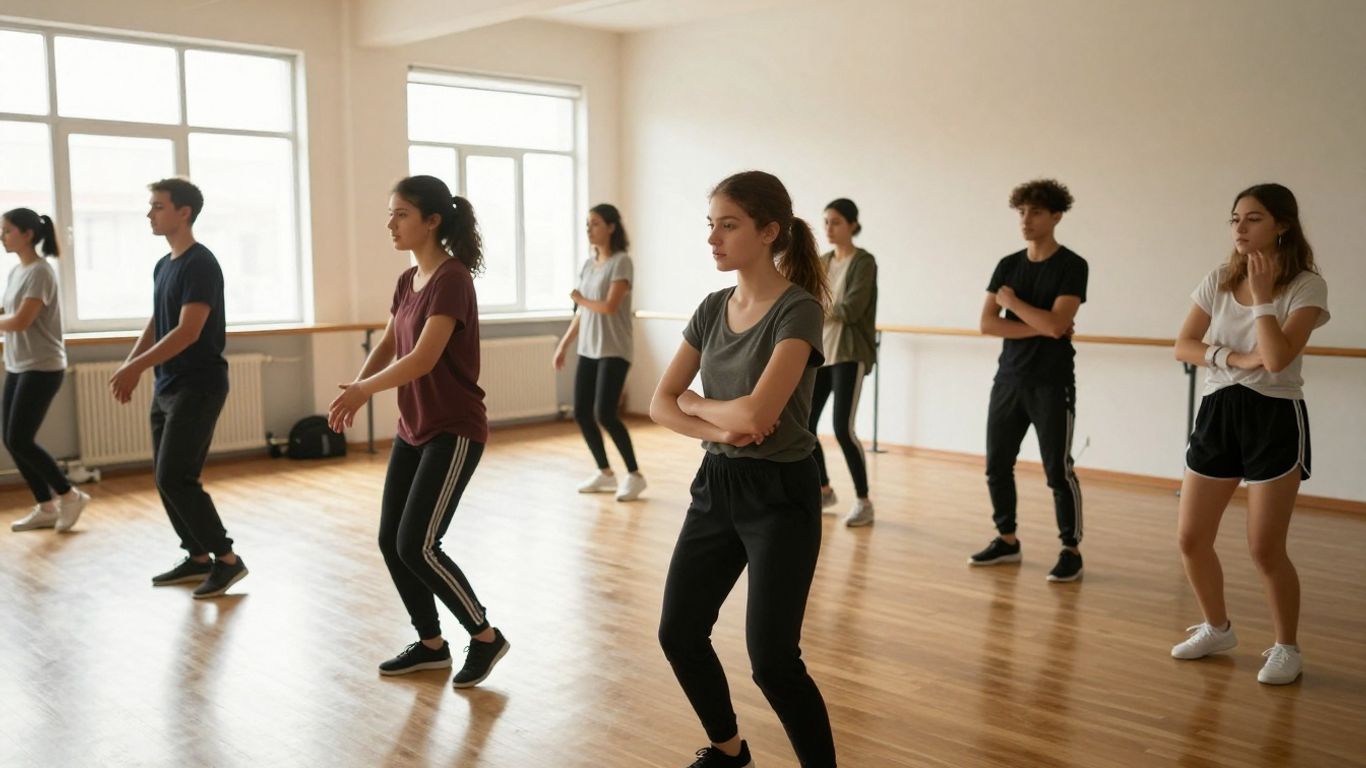
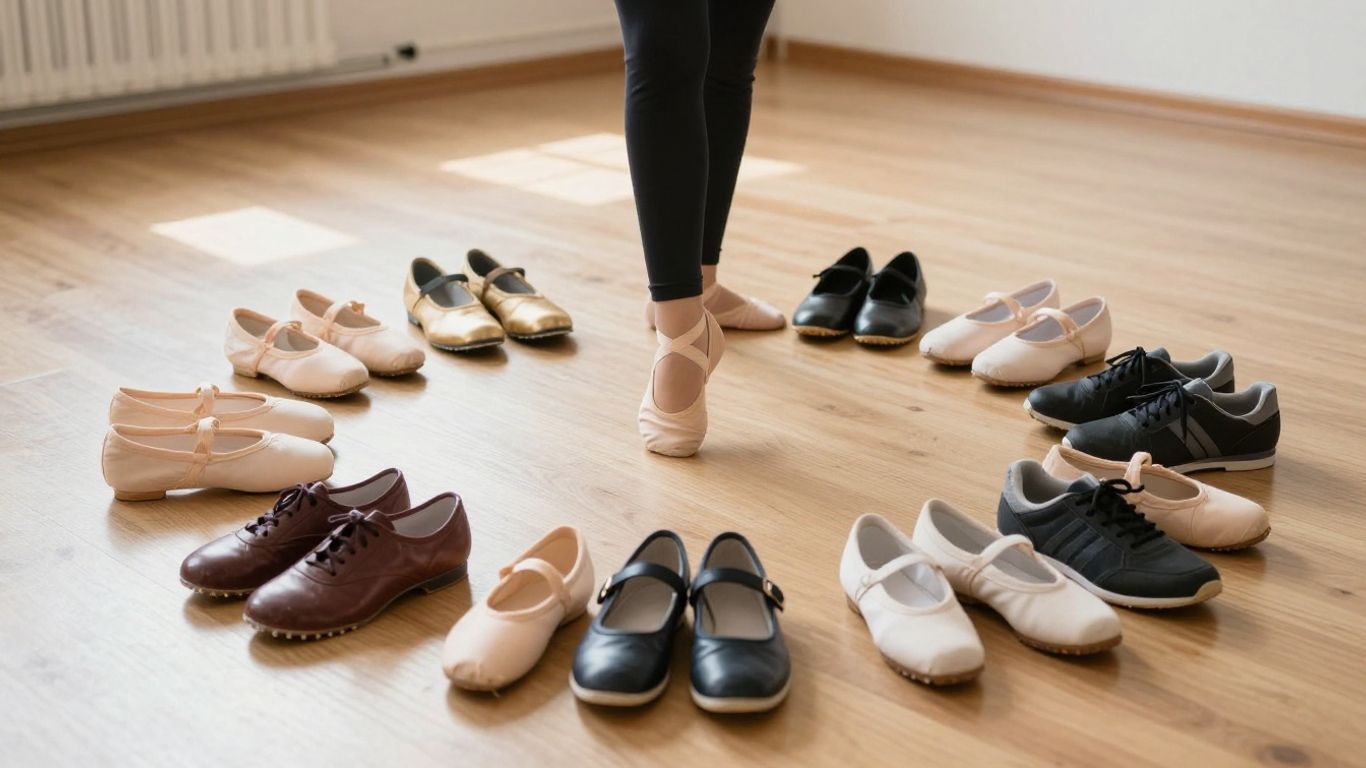
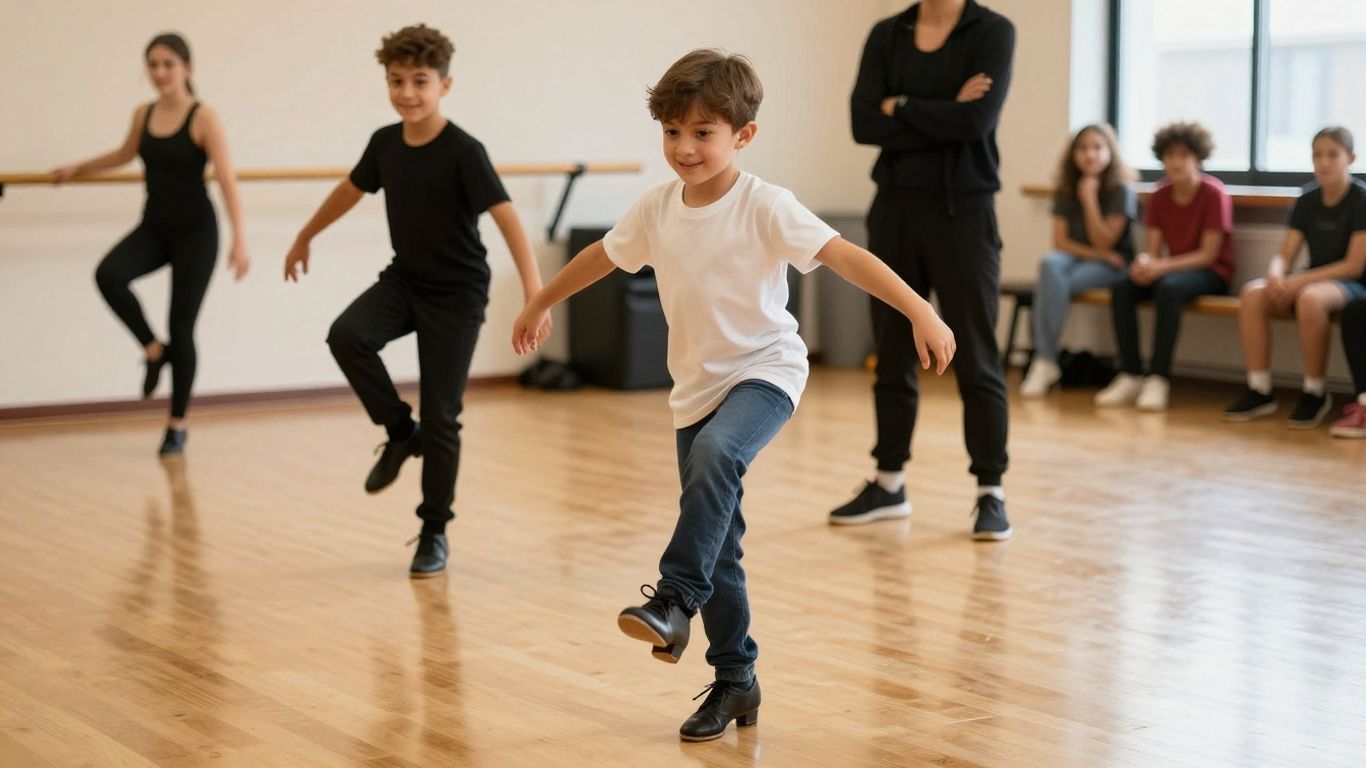
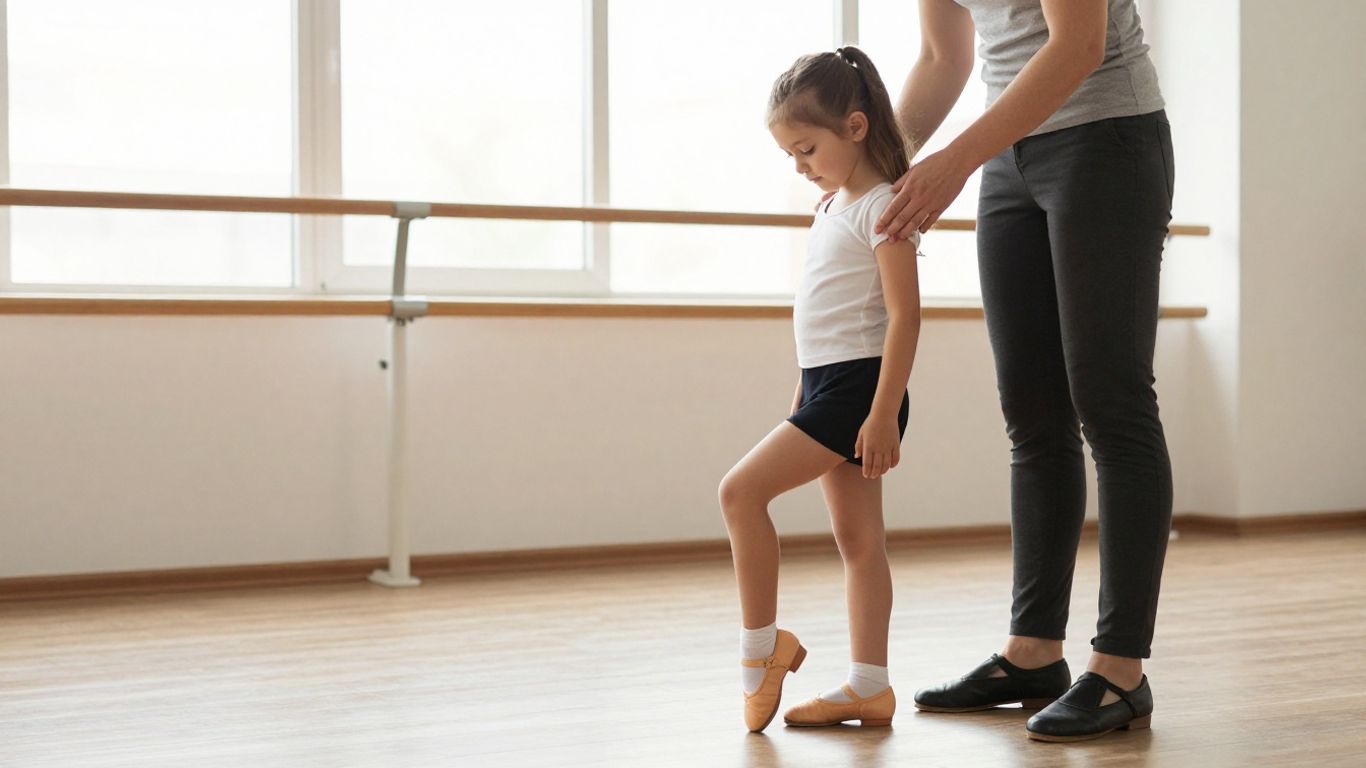
A typical beginner tap class starts with listening. The teacher shows a rhythm, the children echo it, and only then do they try it with their feet. Tap also makes differences in sound easy to hear, because a heel drop, a toe tap, and a brush all sound different. Our Tap 1 class specifically teaches dancers how the different parts of the tap shoe create different sounds, so children learn to notice when their sound doesn’t match the teacher’s.
That has a family resemblance to early literacy work, since both involve listening closely, noticing small differences in sound, and holding a pattern in mind. A resemblance isn’t the same as reading instruction, though. Reading together at home and the teaching your child gets at school are what build reading.
Tap Dance and Math Skills
Tap dance and math skills overlap more in everyday class experience than in research. The evidence here is thinner than for reading, and the Sala and Gobet review included math outcomes and found no overall carry-over from music training.
Counting, Patterns, and Sequencing in Tap Choreography
Dance teachers count in groups of eight, and the familiar “5, 6, 7, 8” brings everyone in together. Tap often splits each beat further (“1 and 2 and 3 and 4”), so children handle halves of a beat long before they meet fractions at school. Choreography is also built from patterns: a short phrase repeats, then changes on the third round.
At home, you might notice your child:
- moving on the next beat before the teacher signals it
- counting quietly to keep their place
- telling you that a step is “the same as last week, but faster”
That is informal contact with counting, grouping, and pattern, not a replacement for math lessons. To build on it, clap a simple rhythm at home and ask your child to continue it.
Memory, Focus, and Coordination That Support Problem-Solving
Learning a tap phrase asks a child to hold a sequence in memory, coordinate both feet, and stay in time with a group, all at once. That’s demanding for a 6-year-old. When a child loses the count, the useful skill is finding the beat again and rejoining rather than stopping, and teachers commonly coach exactly that kind of recovery.
Since Sala and Gobet found no broad transfer from music training, we don’t claim that focus in tap becomes focus in math class. What we can say is that your child gets regular, enjoyable practice at paying attention for a full class, and that is worth having on its own.
What Parents Can Realistically Expect
Most beginners spend their first weeks getting used to the room, the music, and the routine. Some children join in right away and others watch for a few classes first. Both are normal. If your child is nervous, our guide on whether your child is too young or too shy to start tap covers what to expect.
Over a season, reasonable gains are steadier timing, better balance, and more confidence. Tap also builds strength in the ankles and feet, which supports balance and clean weight changes. A change in schoolwork is possible but hard to predict, so don’t enroll expecting one.
Signs Your Child Is Building These Skills in Class
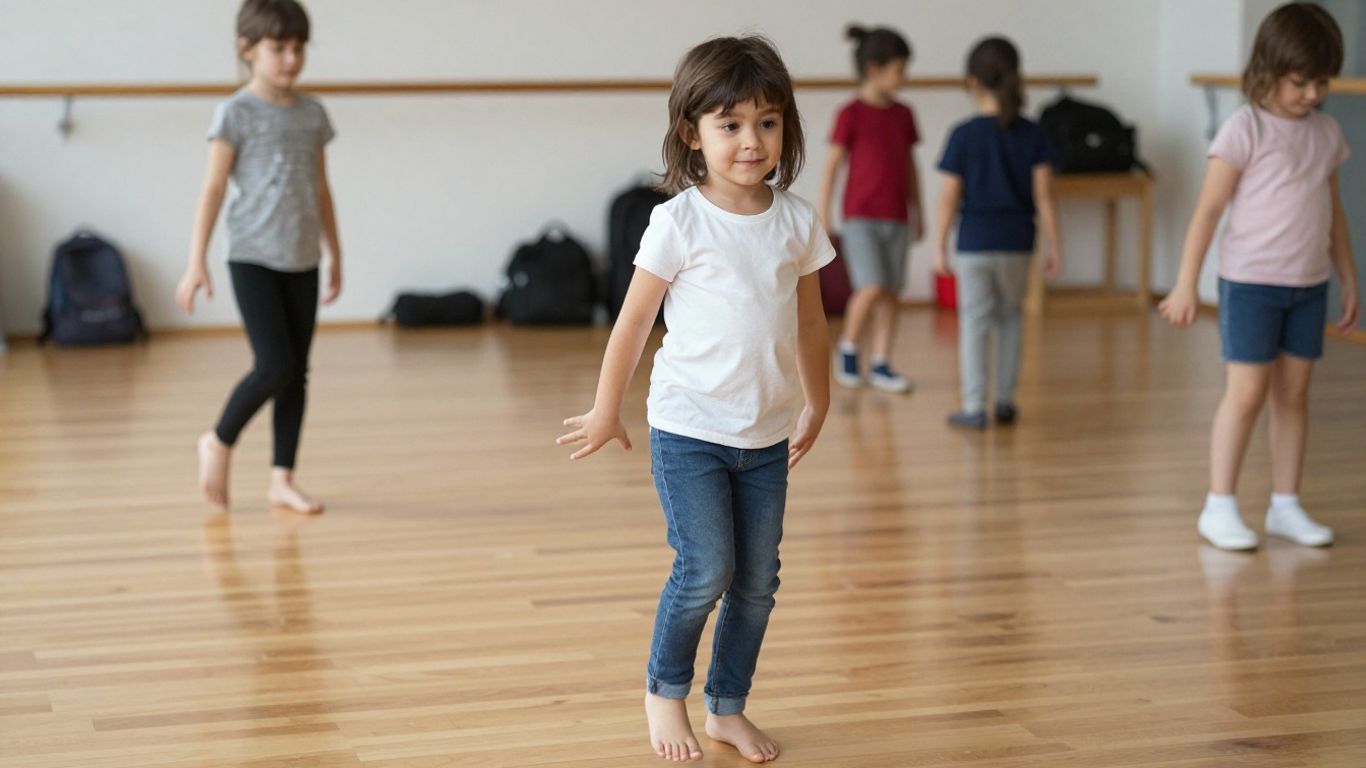
Rather than watching for a change in marks, look for changes in how your child handles class:
- They start moving on the count without watching the teacher’s feet.
- They remember a short phrase from last week with fewer reminders.
- They keep going after a mistake instead of stopping.
- They can tell you when a sound “was off,” which means they’re listening critically.
These signs show your child is engaged and practicing. If you have real concerns about your child’s reading or math, talk to their classroom teacher first. Tap isn’t a substitute for learning support.
What Children Learn in a Beginner Tap Class at CM Dancing
Our tap program starts with the basics: simple steps, steady timing, and clear sounds before anything speeds up. Classes run in our Hamilton studio at 1171 Upper James St, which has five fully equipped studios with sprung flooring and marley surfaces. Sprung floors absorb some of the repeated impact that tap involves. You can read more about our Hamilton tap classes on the CM Dancing page and see the facility for yourself.
Our instructor bios list individual training and credentials, and you can read them on our team pages, including that of our founder, Christine Laska, who has led CM Dancing for 21 years.
How Tap 1 Builds Rhythm, Timing, and Listening Skills
Tap 1 is our beginner class for ages 6 to 8. It focuses on rhythm, timing, and coordination, builds ankle strength, and teaches dancers how different parts of the tap shoe make different sounds. It doesn’t require flexibility or any dance background. Children begin with simple steps and steady timing, then add speed and combinations as they get comfortable.
Dancers can also work toward our Year-End Showcase in June, held in Hamilton. Having a clear goal helps many children stay motivated through the season. If you’re not sure which class fits your child’s age, our age groups page lays out the options.
Try Tap With Your Child at CM Dancing
The best way to know whether tap suits your child is to watch them in a class. Notice whether they’re curious about the sounds, whether they relax as the class goes on, and whether they ask to go back. Those signals tell you more than any study. Current Tap 1 times are on our Schedule and Calendar, and our dress code explains what to wear.
When you explore beginner tap dance for kids, focus on the actual experience rather than promises about school performance. Ask what the class is like, what a beginner can expect, and what your child needs to bring. You can also browse dance and learning ideas for families for broader context about the ways dance may support skills beyond physical activity.
What to Expect at a Trial Class
We offer a free, no-obligation trial class, so your child can try the same teacher, room, and routine they’d have in a regular class before you register for a term. Tell your child beforehand that it’s a chance to try something new, not a test, and that watching for a few minutes is fine.
During class, notice how they respond to the teacher’s cues and the pace. Afterwards, ask an open question like “Which part was your favourite?” or “Do you want to go again?” Their answer will tell you more than whether they mastered a step. Ready to see how your child reacts? Book a trial through our Schedule and Calendar or contact us, or call us.
Conclusion
Tap can give your child a joyful way to practice listening, timing, coordination, and repeated patterns. Those experiences have plausible connections to skills used in school, but the evidence does not justify promising better reading or math results from tap alone. If your child enjoys the music and movement, that enjoyment—and the confidence that can grow from trying something new—makes a beginner class worth considering.
Frequently Asked Questions
Can tap dance help a child learn to read?
Tap involves listening to rhythm and responding to sound, skills that have some overlap with aspects of language processing. That does not establish that tap lessons teach reading or improve reading outcomes; children still need direct literacy experiences and appropriate instruction.
Does tap dance improve math skills?
Tap may give children a physical way to explore counting, repetition, and sequence. These are useful experiences, but they do not prove that a child will perform better in math at school.
What is the connection between rhythm and reading readiness in children?
Rhythm asks children to notice timing and sound patterns, while early language learning also involves attention to sounds. Researchers have explored possible connections, but rhythmic activity is not a substitute for reading practice or formal support.
What does research say about dance and academic performance in kids?
Research on music, rhythm, or dance in general should not be treated as proof about every dance style or class. Evidence about academic outcomes from tap specifically is limited, so claims should be modest and clearly qualified.
What skills can children practice in beginner tap?
Depending on the class and the child, beginner tap may involve listening for cues, following a short movement sequence, keeping time, and coordinating steps. Children also need time to become comfortable with the class routine.
How can tap support kids’ coordination and focus?
Matching movement to a sound or cue gives children an opportunity to practice coordination and attention in the moment. How those skills develop varies from child to child, and practice does not guarantee a particular change outside class.
How should you choose a first tap class for your child?
Look for a beginner-appropriate setting where your child can try the activity at a comfortable pace. Consider the child’s interest, readiness, and response to the class rather than choosing solely on the expectation of academic benefits.